


 English
 中文简体
 русский
 عربى
Steel Stud and Track Roll Forming Machines
Steel Stud and Track Roll Forming Machines are automated machines specifically designed to continuously cold-bend and plastically deform continuous co...
See DetailContent
Feed a coil of 1.5 mm grade 304 into a line that was just running 2.0 mm galvanized steel smoothly, and the first profile will almost certainly be out of tolerance. Nothing is broken. The springback changed. Stainless steel keeps work hardening with every pass, so a roll flower tuned for carbon steel usually needs more stations, more overbend and a completely different lubrication approach before it will hold a stainless angle. What follows is what actually matters when you set up or buy a stainless steel roll forming line.
Cold roll forming stainless steel demands higher forming force, more passes and greater overbend compensation than forming the same thickness of carbon steel, because austenitic stainless keeps work hardening through every station instead of settling into a stable flow stress plateau.
Three material properties drive almost all of the practical difference between running 304 and running galvanized steel at the same gauge:
Stainless also has a higher coefficient of friction against tool steel and roughly one third the thermal conductivity of carbon steel, so heat concentrates at the roll contact zone instead of dissipating into the strip.
The stainless grade you select before tooling design determines the number of forming stations and the roll radii, because austenitic grades such as 304 and 316 need the most passes, while ferritic and martensitic grades need fewer passes but carry a much higher cracking risk.
Austenitic grades harden fast but stay ductile, which is why they tolerate a long roll flower. Ferritic grades such as 430 have lower elongation and a yield point that behaves differently in tension and compression, so they tend to fail at the bend line rather than spring back gradually.
| Grade | Typical Rp0.2 (MPa) | Work hardening | Practical note |
| 304 / 304L | 205 to 310 | High, n around 0.45 | Benchmark austenitic grade. Longest roll flower, strongest springback, very tolerant of repeated bending |
| 316 / 316L | 205 to 310 | High, similar to 304 | Forms much like 304. Use for chloride or marine exposure. Higher cost justifies tighter scrap control |
| 201 | 350 to 450 | Medium to high | Harder incoming coil than 304. Needs more forming force and careful radius control on tight bends |
| 430 | 310 to 400 | Low | Ferritic. Fewer stations, but edge and bend cracking risk rises sharply below a 1t bend radius |
| 409 | 170 to 250 | Low | Easiest to form. Used for exhaust and heat shield profiles where corrosion demand is moderate |
A common mistake is to design one roll flower for the whole family. A toolset that runs 304 comfortably is usually over-engineered for 430, and a toolset built for 430 will crack 304 at the last station because it does not leave enough room for the material to redistribute.
If you are new to the machine architecture itself, the basic structure of stations, shafts and drives is covered in this roll forming machine fundamentals page. The tooling parameters still have to be recalculated from scratch for stainless.
Getting stainless steel roll forming right comes down to controlling five tooling parameters, and the first two account for most of the failures seen on new lines: the angle increment per pass and the spacing between passes.
Carbon steel lines often run 8 to 12 degrees of bend per station. Stainless should stay at 5 to 8 degrees for the first few passes and taper further toward the end, because that is where the accumulated work hardening bites. Going above 10 degrees on 304 in the later stations produces edge wave that no amount of straightener adjustment will remove.
A stainless profile of the same section generally needs two to four more stations than the carbon steel equivalent. The extra stations are not there to bend more material, they are there to bend it more gently and to give springback somewhere to recover between passes.
Larger roll diameters reduce the contact angle and spread the forming load, but they also increase the arc of contact and the springback leverage. For stainless between 0.8 mm and 2.0 mm, roll diameters in the 120 to 180 mm range are a reasonable starting point. Shaft deflection matters more here than on carbon steel because the load is higher.
Plan on 4 to 7 degrees of overbend on a 90 degree flange in 1.5 mm stainless, roughly double what you would use on galvanized. The compensation has to be distributed across the final two or three forming stations plus the sizing passes rather than applied all at once.
D2 or DC53 tool steel hardened to 58 to 62 HRC is the usual choice. A hard chrome finish of 5 to 10 microns on the working rolls reduces friction and metal pickup. Polished rolls are fine for 2B material but will visibly mark a BA or mirror surface if there is any relative slip.
Tolerance bands for custom profiles are tighter than most buyers expect, and the material specific numbers are worth reading before you sign a drawing. There is a useful reference on custom roll forming design tolerances and material selection that covers the stainless case in more detail.
Most cosmetic rejects in stainless steel roll forming come from relative sliding between roll and strip, not from the bending itself, which is why surface protection and roll speed matching matter more than bend radii on a stainless line.
When a roll surface moves faster or slower than the strip at the contact point, the strip is dragged sideways. On carbon steel that shows up as a dull scuff that is easy to overlook. On stainless it tears the protective film, picks up metal on the roll, and then repeats the same mark on every subsequent length of coil.
These surfaces tolerate minor sliding marks because the finish already scatters light. A PE protective film from the mill is usually enough. Line speed can be slightly higher and roll polishing requirements are less severe.
Any longitudinal drag mark is a reject. Keep roll surface speed matched to strip speed within roughly 1 percent, cut line speed by 20 to 30 percent, and use hard chrome or polished rolls with a dedicated lubricant rather than a general purpose forming oil.
Two practical habits help here. First, keep the protective film on through the forming section and remove it only after the cut off press, not before. Second, check roll pickup every shift during the first week of a new job. A single bright spot on a roll will transfer to hundreds of metres of strip before anyone notices.
Stainless steel roll forming lines usually run at 50 to 70 percent of the line speed used for the same thickness of galvanized steel, and that is a deliberate process decision rather than a machine limitation.
Running faster raises the temperature at the roll contact, increases metal pickup, accelerates roll wear, and makes springback less predictable because the material properties are now temperature dependent as well. Slower is cheaper than scrapping coils.
Lubricant choice is where many stainless lines quietly lose money. Chlorinated oils give excellent extreme pressure performance on carbon steel but can leave residues that promote pitting on stainless if they are not fully removed. A chlorine free synthetic with high EP content is the safer default, applied with a felt wiper or a roller applicator rather than a flood system that coats the whole machine.
Roll wear on stainless is roughly 1.5 to 2 times the rate seen on carbon steel at the same tonnage. That does not mean you need exotic tooling. It means you should plan a roll inspection interval based on tonnage rather than calendar time, and keep a spare set of the sizing rolls, which wear fastest.
A standard cold roll forming line is the more economical choice for stainless when the profile geometry and surface requirement are both stable and already covered by an existing machine series; a custom line is the only workable route once the section, the material thickness or the finish falls outside those ranges.
For stainless work specifically, two profile families come up again and again in enquiries, and both have mature standard platforms behind them.
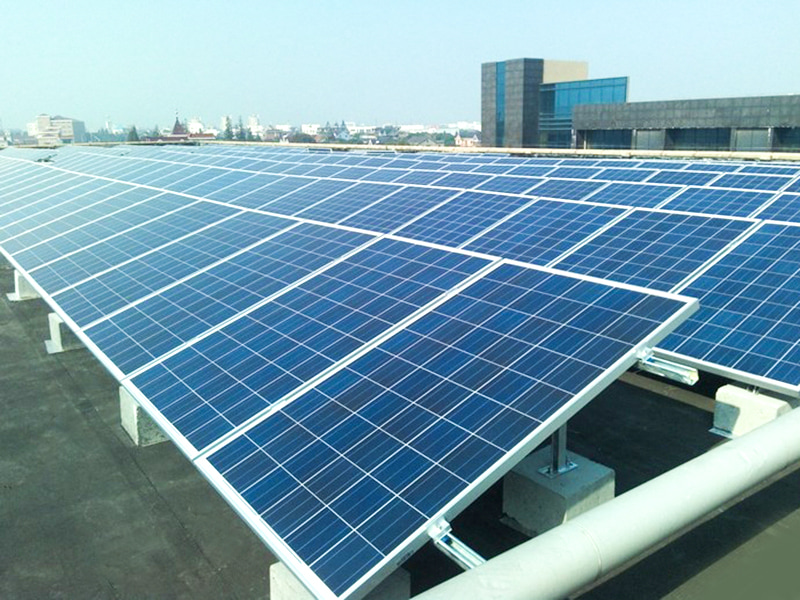 Solar Strut Channel Roll Forming MachineAutomated roll forming machine for photovoltaic support profiles, producing C/U rails, Z/Σ purlins, and ground screw sleeves from coated steel, aluminum, or stainless.View Product →
Solar strut channel is a good example. Stainless strut is specified for coastal and high humidity installations where galvanized coating life is the limiting factor. The section is simple, the tolerances are manageable, and a standard machine with a stainless specific roll set covers most of the demand without any custom engineering.
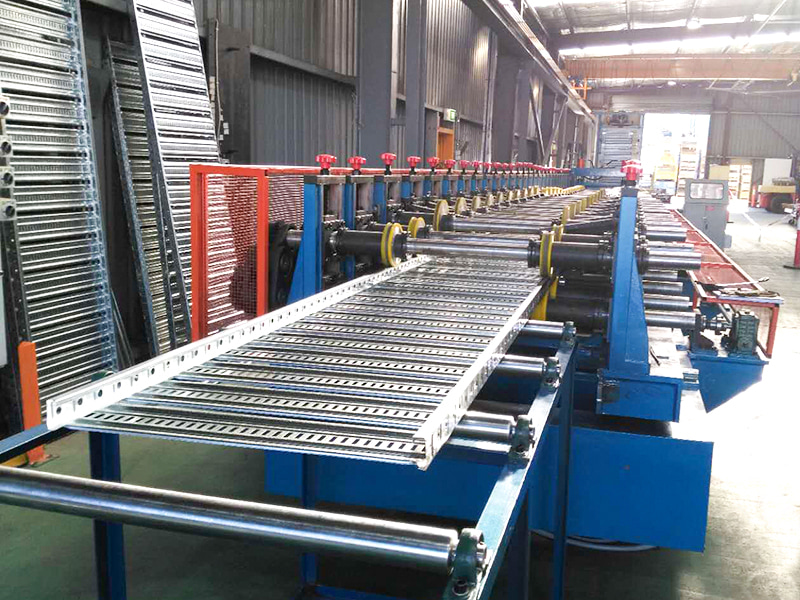 Cable Tray Roll Forming MachineAutomatic roll forming machine for ladder, tray, and channel cable trays, processing galvanized steel, aluminum alloy, or stainless steel coils for power, communications, and construction.View Product →
Cable tray is similar. Stainless cable tray for food plants, chemical facilities and offshore platforms is a well established product, and the perforation and bending sequence is standardised enough that a proven platform is usually faster and cheaper than a bespoke design.
Where a custom line becomes unavoidable is thin gauge below 0.8 mm, very tight bend radii, asymmetric sections, or a surface requirement that rules out any sliding contact at all. In those cases the roll flower, the roll material and the drive configuration all have to be designed together.
 Garden Bed Roll Forming MachineAutomated line for flowerbed guardrails, garden borders, and stepped planting troughs, producing wavy, wood-grain, or multicolor profiles for landscape greening.View Product →
Garden edging and similar small decorative profiles are a typical custom case. The section is narrow, the material is often 0.5 to 0.8 mm stainless, and the visible surface has to come out unmarked, so the tooling design is driven by contact control as much as by bend geometry.
Factory acceptance testing for a stainless steel roll forming line should focus on four things: section tolerance over a full coil, surface condition, roll wear after a defined tonnage, and speed stability at the rated output.
Yes, but not without changes. The forming stations, roll flower and lubrication all have to be reviewed. In practice the frame and drives are usually reusable, while the rolls and the springback compensation almost always need to be redesigned for the higher yield strength and the larger springback of stainless.
The most common cause is under-compensated springback, followed by excessive angle per pass in the later stations. Stainless springs back two to three times as much as low carbon steel, so a roll flower designed with carbon steel values will consistently deliver open angles that drift further as the tooling wears.
They behave almost identically on the line. Both are austenitic with a similar strain hardening exponent and similar incoming yield strength, so the same roll flower usually runs both. The difference is cost and corrosion performance, not formability.
As a working rule, plan on two to four more stations than the equivalent carbon steel profile, with 5 to 8 degrees of bend per pass in the early stations and less toward the end. Complex sections with multiple returns can need considerably more.
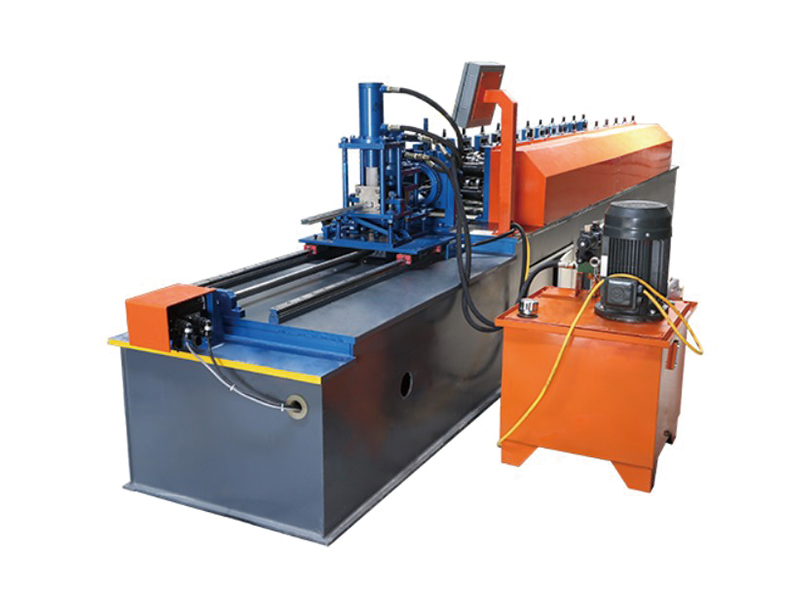
Steel Stud and Track Roll Forming Machines are automated machines specifically designed to continuously cold-bend and plastically deform continuous co...
See Detail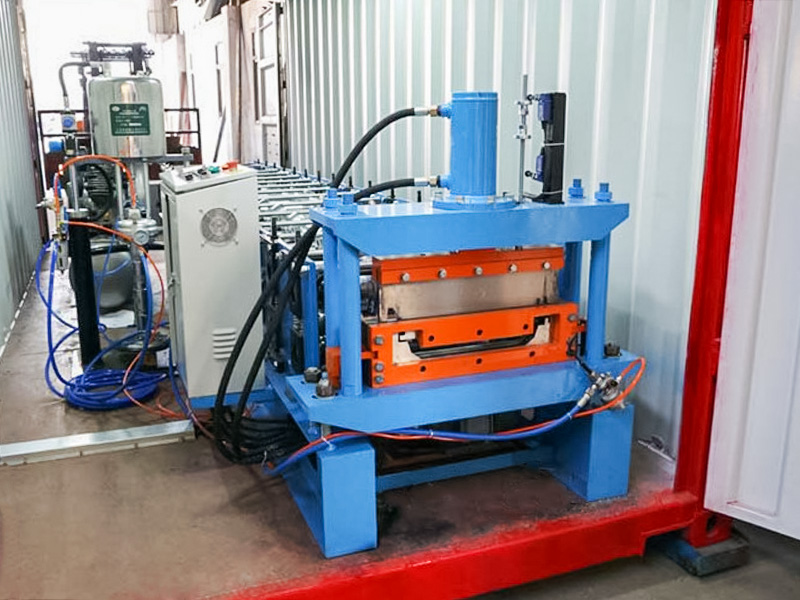
Compared with the common roofing sheet roll forming machine, the standing seam roll forming machine has a smaller body size, but the rolling tools are...
See Detail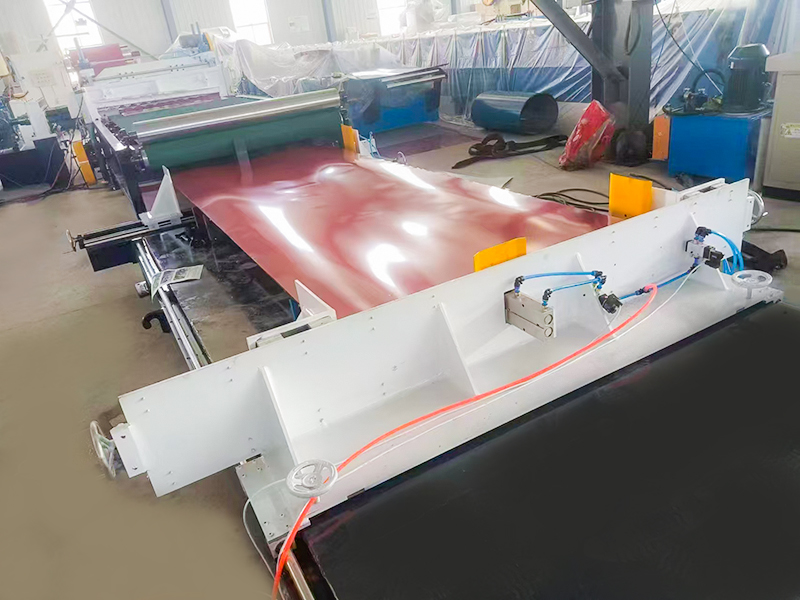
The steel coil cut-to-length line is an automated production line that continuously unwinds, levelizes, and cuts rolled metal sheets (steel coils, alu...
See Detail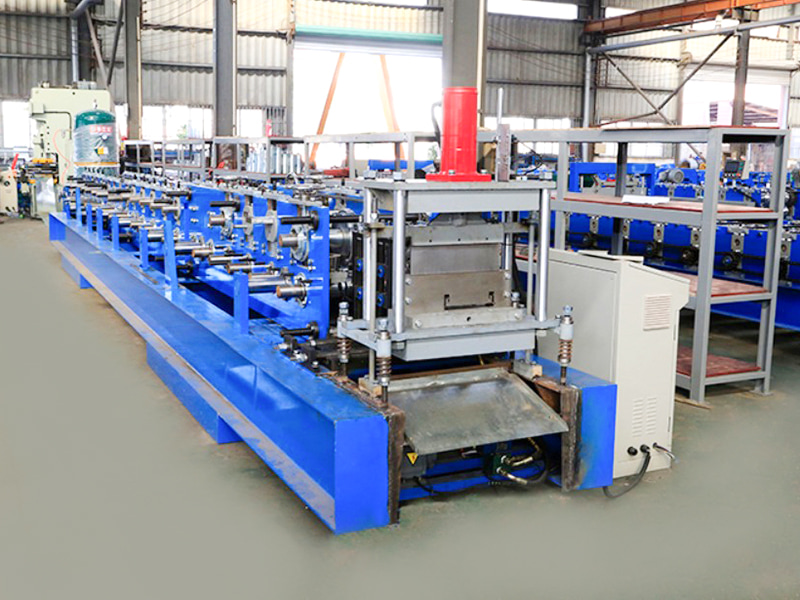
The Scaffold Industry Roll Forming Machines is an automated rolling machine specifically designed for the mass production of steel walkboards (scaffol...
See Detail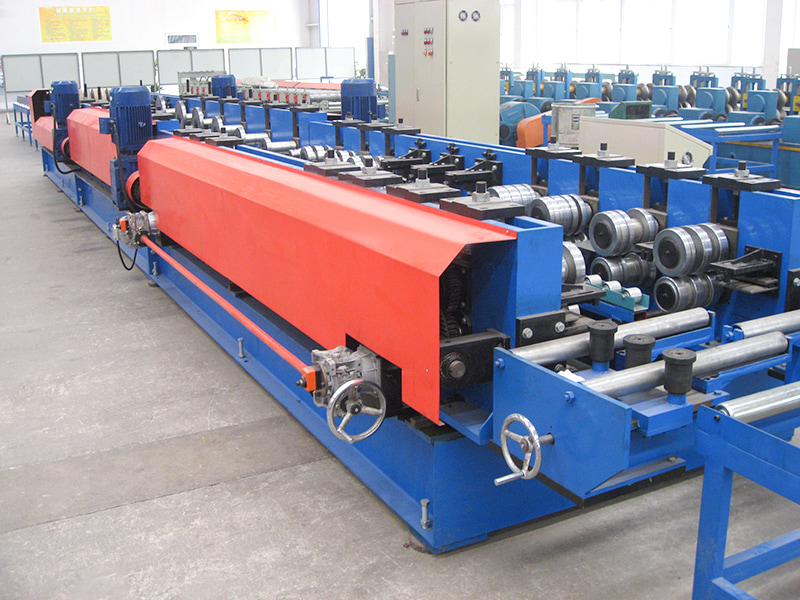
The cable tray roll forming machine is a fully automatic roll forming machine specifically designed for the mass production of metal support component...
See Detail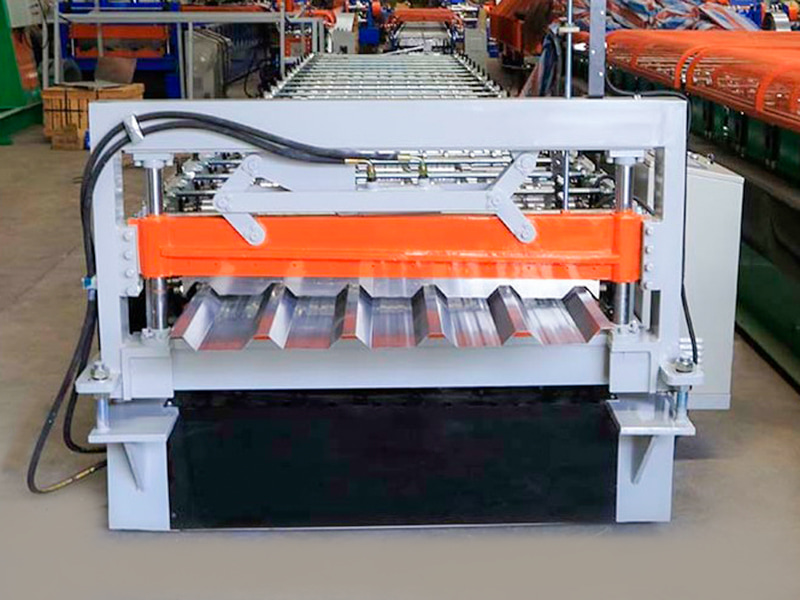
The high speed roofing sheet roll forming machine is a fully automatic sheet metal processing machine designed specifically for the construction indus...
See Detail

Copyright ©Jiangyin Hailong Machinery Factory All rights reserved Roll Forming Machine Manufacturers
