


 English
 中文简体
 русский
 عربى
Steel Coil Cut-To-Length Line
The steel coil cut-to-length line is an automated production line that continuously unwinds, levelizes, and cuts rolled metal sheets (steel coils, alu...
See DetailContent
Coil handling and line integration
A roll forming line quoted at 30 m/min rarely holds 30 m/min for a full shift, and the shortfall is usually not in the roll former. It is in the steel coil handling equipment bolted to the front of it: the uncoiler that cannot hold back tension, the leveler that leaves coil set in the strip, or the shear that adds two seconds of dwell time to every cut.
Put real numbers on that. A 1250 mm wide galvanized coil, 0.5 mm thick, 5 t on the mandrel, 508 mm inner diameter, wound out to roughly 1400 mm outer diameter. Before the first forming station touches it, that coil has to be lifted, expanded, peeled, uncoiled, flattened, measured, cut to length and fed forward without edge damage, width variation or length error. Every one of those steps belongs to coil handling, and any one of them can cap the output of a machine that was specified perfectly well on paper.
Steel coil handling equipment is the group of machines that take a wound coil and deliver flat, tension-controlled, correctly sized strip to the first forming station. On a roll forming line that group normally means an uncoiler, a coil car, a peeler and hold-down arm, a leveler, and either a cut-to-length shear or a slitting head, plus the loop and feed systems that link them.
Definition: coil handling equipment covers every machine between the coil storage saddle and the entry guide of the roll former. If a machine touches the strip before the first forming pass, it belongs in this category, and it belongs in the line's accuracy budget.
Builders of cold roll forming machines normally offer this equipment as an auxiliary range, because a roll former cannot be specified in isolation. The handling equipment sets strip condition; the roll former only shapes what it receives.
The way these stages interact is worth reading in full before a line is specified, because each one can quietly hand its own error to the next: a closer look at coil processing operations shows where accuracy is won and lost.
An uncoiler is specified by three numbers, coil weight, coil inner diameter and coil outer diameter, and by how well it holds back tension as the coil unwinds.
Coil weight drives spindle diameter, bearing size and baseplate. A 3 t mandrel and a 10 t mandrel look similar in a photograph and behave nothing alike under load: at 10 t the dynamic load on the baseplate roughly triples, and a foundation that was adequate for 5 t will vibrate. Inner diameter is the specification buyers most often get wrong. Coils arrive at 480 mm, 508 mm or 530 mm depending on the mill and the product, and a mandrel rated at 508 mm nominal may not expand far enough to grip a 480 mm coil. Loose grip becomes coil slip, and coil slip becomes edge marking and erratic feed well before anyone blames the uncoiler.
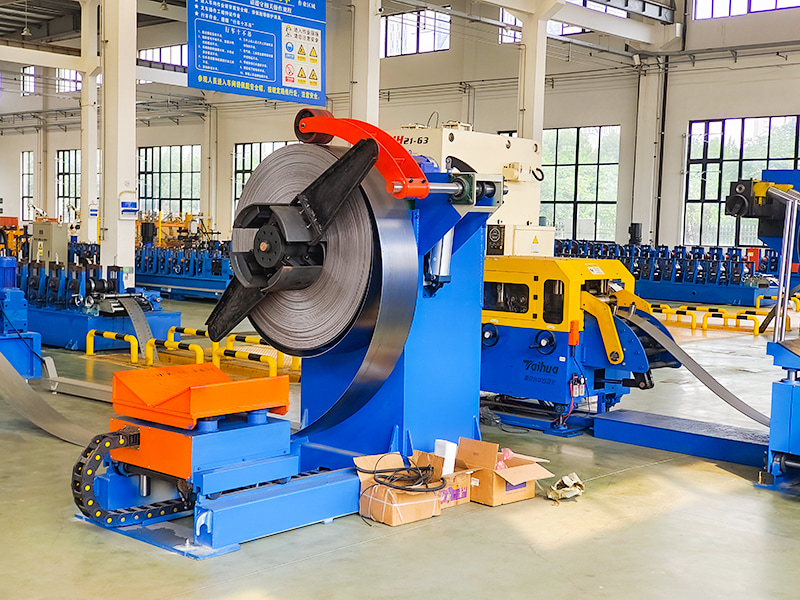 Hydraulic Steel Coil Uncoiler for Metal ProcessingHandles 450–530 mm coil IDs and 2.5–20 t coils; hydraulic expansion and braking keep tension stable in roll forming, slitting and cut-to-length lines.View Product →
Back tension matters more than most buyers expect. A simple pneumatic brake is cheap, but the drag it applies drifts as the coil diameter falls from 1400 mm to 508 mm, so the strip enters the line under a changing load. Hydraulic and motorised uncoilers with variable tension hold that load steady, which is often the difference between a line that holds tolerance across a shift and one that drifts.
A leveler removes coil set, crossbow and edge wave by bending the strip alternately past its yield point. Roll count, roll diameter and the use of backup rolls decide how much residual curvature survives into the roll former.
Five-roll levelers handle light coil set on thicker material. Seven and nine-roll machines are the working standard for roofing and cladding lines running 0.4 to 1.2 mm. Eleven and thirteen-roll machines with backup rolls are used when the strip is thin, high strength, or destined for a visible surface, because 0.5 mm galvanized sheet at 550 MPa behaves nothing like 2 mm mild steel under the same roll gap. Over-leveling carries its own risk: every extra pass work-hardens the strip, and on coated material excessive bending can crack or flake the coating at the bend line. The goal is the least leveling that produces flat strip, not the most the machine can apply.
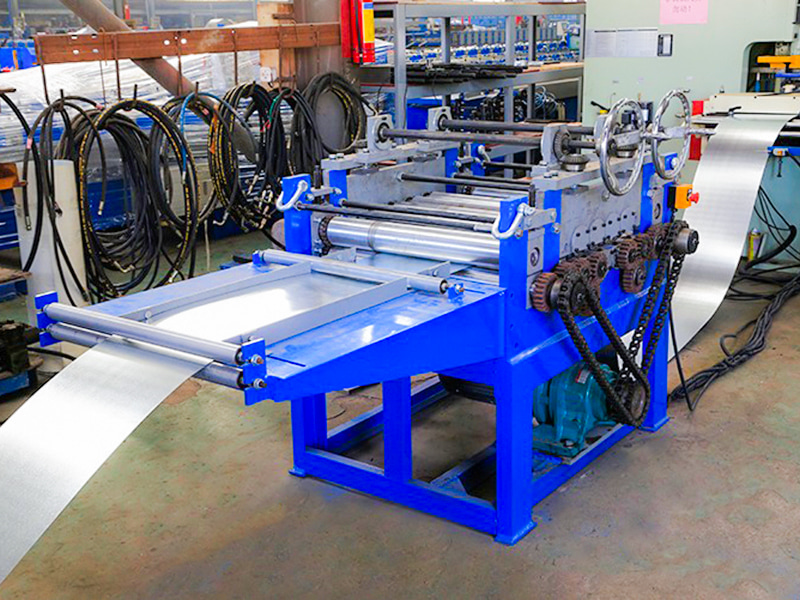 HCL Series Steel Coil Leveling MachinesMulti-roll leveler for 1.0–6.0 mm strip, placed after the uncoiler and before forming to remove coil set, wavy edges and residual stress.View Product →
Buyers should ask for a flatness figure in mm per metre measured on delivered strip, and for a leveler that stays adjustable in service rather than being set once at the factory.
Cut-to-length equipment sets the strip length entering the roll former or press, while a slitting head sets strip width when the incoming coil is wider than the finished profile.
Servo feed rolls with an encoder typically repeat to within about 0.5 mm on a fixed cut length and hold roughly 1 mm absolute accuracy. That tolerance decides whether a roofing sheet overhangs or falls short at the eaves, so it deserves a number in the specification rather than the adjective accurate. Slitting is the other half of coil sizing: narrow profiles such as solar strut channel, cable tray and steel stud are usually run from slit coil, and slit edge quality, meaning burr height and camber, transfers directly onto the finished part.
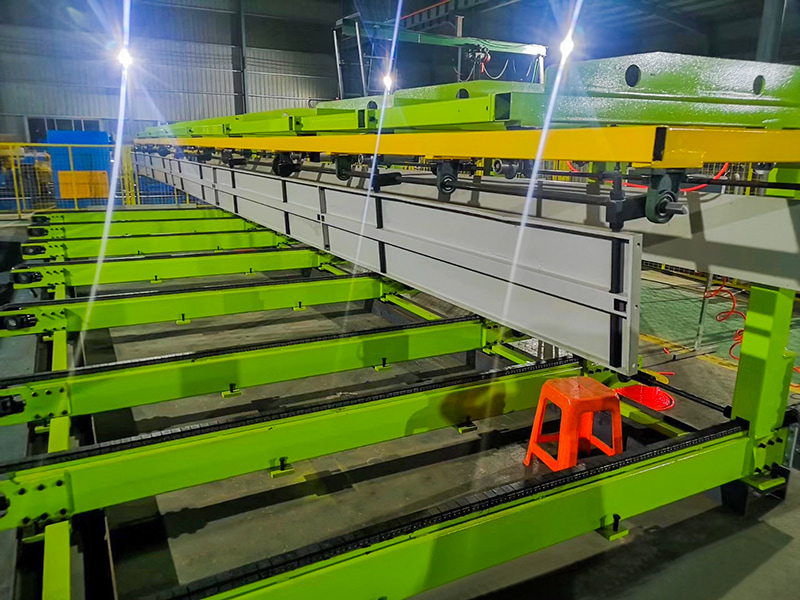 Steel Coil Cut-to-Length Line for Sheet ProcessingAutomated line for unwinding, leveling and fixed-length cutting of GI, PPGI, MS and stainless coils up to 1250 mm wide.View Product →
If the roll former runs continuously and the shear stops to cut, the loop pit is not optional. Size it for the worst case: longest cut length multiplied by the highest line speed, with margin for the acceleration ramp.
Coil handling equipment should be sized backwards from the roll former's duty cycle, not forwards from the coil alone. Three matching rules cover most of the mistakes made at quotation stage.
Checking those numbers against a physical sequence is easier than reading them off a datasheet, and the line layout diagram shows how the uncoiler, leveler, loop and roll former sit together on the floor.
Buying the handling equipment from the same builder as the roll former also shortens the tolerance chain. A manufacturer running its own machining lines and design team, as Jiangyin Hailong Machinery has done since 2003 with 160 staff and 14 technicians, can quote uncoiler, leveler and cut-to-length line as one matched package rather than three purchases that have to be reconciled on site.
The handling specification should state ranges rather than single values, because a line is usually asked to run several coil sizes over its working life.
| Parameter | Typical range | Why it matters |
| Coil weight | 3 to 10 t | Sets spindle diameter, bearings and baseplate stiffness |
| Coil inner diameter | 480 to 530 mm | Mandrel must expand to grip the smallest coil supplied |
| Coil outer diameter | up to 1600 mm | Drives coil car travel and hold-down arm geometry |
| Strip thickness | 0.3 to 4.0 mm | Thin strip needs tension control and backup rolls |
| Strip width | 600 to 1500 mm | Defines line centre and slitting head size |
| Leveler rolls | 5 to 13 | Roll count governs residual curvature in the finished profile |
| Length repeatability | 0.5 to 1 mm | Feeds directly into finished part dimension and waste |
| Line speed | 5 to 40 m/min | Determines accumulator volume and shear type |
Ask for the flatness figure, the length tolerance and the coil size range in writing. Those three numbers define performance far more reliably than a rated line speed, which is only reachable when the handling equipment in front of it is correctly matched.
Most coil handling faults first appear as downstream quality problems, so maintenance should be scheduled by running hours rather than by visible failure.
Three to five tonnes is the common standard for a general purpose line. Eight to ten tonnes requires a heavier spindle, larger bearings and a reinforced baseplate, so check the spindle diameter and bearing rating rather than only the rated load printed on the datasheet.
Usually yes. Straightening rolls inside a roll former make small shape corrections and are not built to remove heavy coil set or crossbow. If the feedstock is thinner than 0.6 mm, or above 450 MPa yield, a dedicated leveler ahead of the line pays for itself in reduced profile variation.
A servo feed with an encoder typically holds about 0.5 mm on a repeated fixed length and about 1 mm absolute. A start-stop shear with a mechanical stop is closer to 1 to 2 mm. State the tolerance the finished part needs, then let the supplier size the feed system to meet it.
In most cases yes, provided there is floor space for the uncoiler, coil car and loop. The practical limits are the existing entry height, the control interface and whether the line can accept a synchronised feed signal. Adding a leveler and a cut-to-length line to a machine previously fed by hand-cut blanks is a common upgrade.
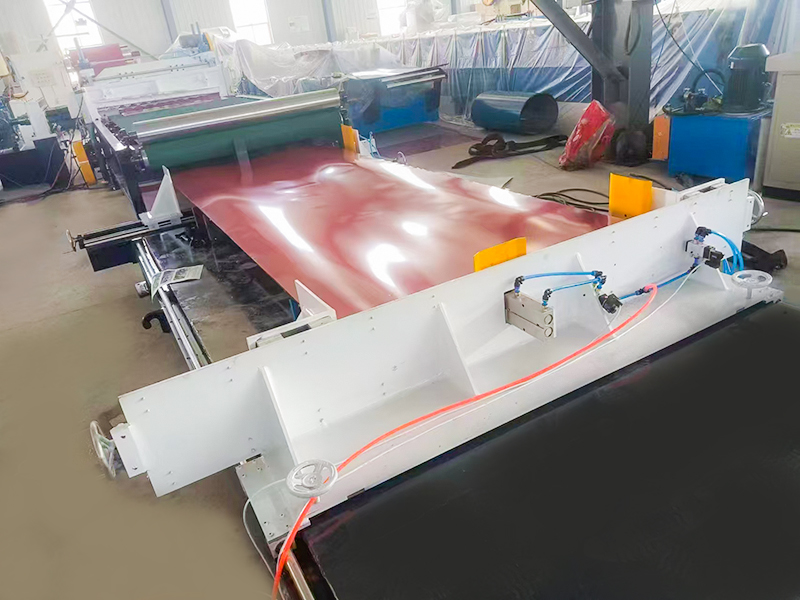
The steel coil cut-to-length line is an automated production line that continuously unwinds, levelizes, and cuts rolled metal sheets (steel coils, alu...
See Detail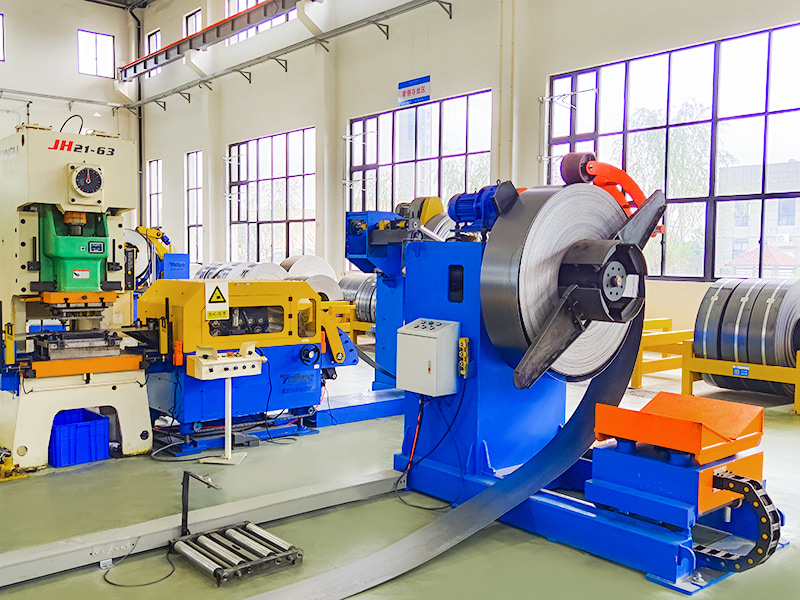
A Steel Coil Hydraulic uncoiler is a key piece of equipment used in sheet metal processing lines (such as roll forming lines, slitting lines, cut-to-l...
See Detail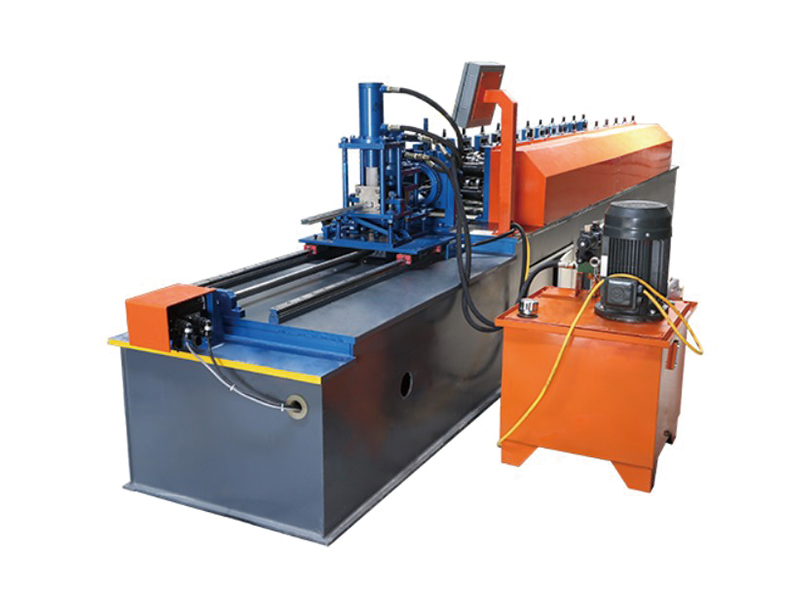
Steel Stud and Track Roll Forming Machines are automated machines specifically designed to continuously cold-bend and plastically deform continuous co...
See Detail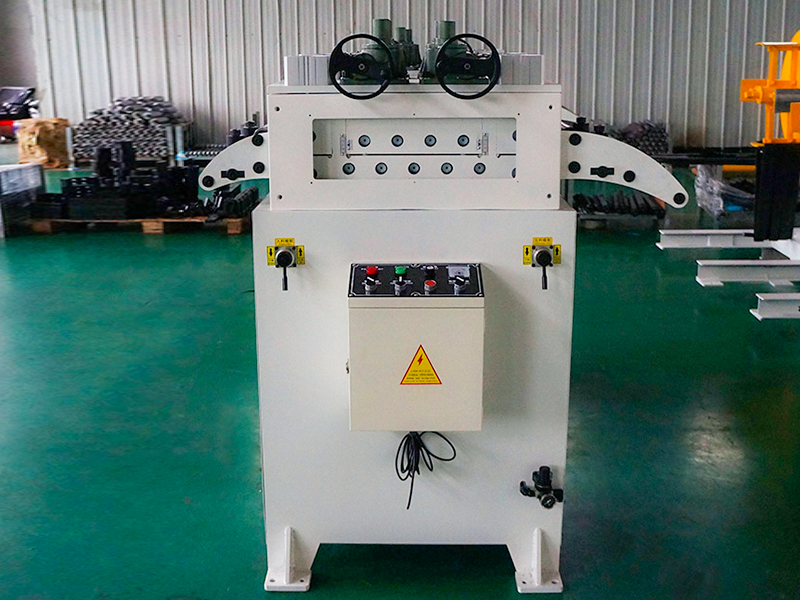
The Steel Coil Leveling Machines (also known as a leveler or straightener) in a cold roll forming production line is a key piece of equipment located ...
See Detail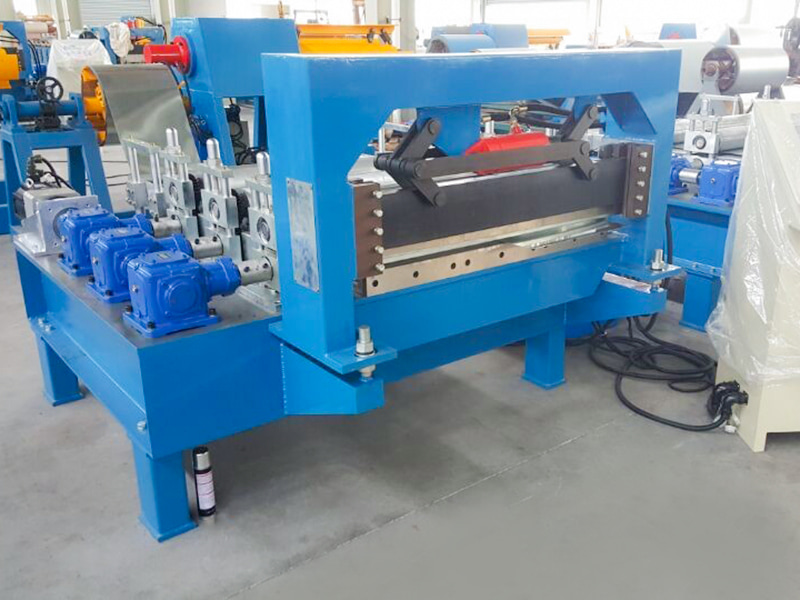
The Simple Coil Flattening and Cutting Machine is an economical two-in-one machine for pre-processing metal sheets, offering a simple structure, basic...
See Detail
The 80-300 type Fully Automatic C-purlin Roll Forming Machine is a high-performance automated production equipment designed to meet the construction i...
See Detail

Copyright ©Jiangyin Hailong Machinery Factory All rights reserved Roll Forming Machine Manufacturers
