


 English
 中文简体
 русский
 عربى
Flatpack Container House Top Beam Roll Forming Machine
The flatpack container house top beam roll forming machine is specially tailored for the flatpack container roof structure production. Through high-pr...
See DetailContent
That twist usually starts at the steel mill. Hot rolled coil is wound under tension and cools in that shape, so residual stress is built into the strip long before it reaches your uncoiler. Stretch leveling is the step that takes it back out.
Stretch leveling is a flattening process that grips both ends of a sheet, or both ends of a coil length through bridle rolls, and pulls the material past its yield point so it comes back flat.
Two things separate it from other flattening methods. The strain is applied as tension along the length of the strip rather than as bending over rolls, and that strain is plastic, so the strip is permanently lengthened by a small amount, typically 0.1 to 0.5 percent on mild steel. Stress is equalised across the full width and through the thickness instead of being shifted from one zone to another.
The practical result is that shape defects are removed rather than moved around:
A roller leveler bends the strip alternately up and down over small rolls. That removes visible waves, but it leaves a stress pattern of its own, and high strength steel springs back before the bend is fully working. Stretch leveling sidesteps both problems because the whole cross section is loaded at once.
Stretch leveling produces the flattest, most stress free strip of the three common processes, but it is slower and costs more per ton than roller leveling, and it does not add the surface hardness that temper passing gives.
| Process | How it works | Typical flatness | Effect on stress | Best fit |
| Roller leveling | Alternating bends over small rolls | 8 to 15 I-units | Reduces but does not eliminate | General sheet, high speed lines |
| Stretch leveling | Tension pulled past the yield point | 2 to 5 I-units | Equalises through the thickness | Laser blanks, exposed panels, high strength steel |
| Temper passing | Light rolling at 0.5 to 2 percent reduction | 5 to 10 I-units | Partial, adds surface hardness | Automotive and appliance skin |
The cost gap is easy to justify on some products and impossible on others. A laser cut blank that must sit flat on a vacuum table has no tolerance for a 12 I-unit wave. A bundle of C purlins heading to a frame site usually does.
Residual stress that survives the leveler comes out on the forming line as twist, bow, camber or web wave, and no amount of roll adjustment removes it.
Twist is the expensive one. A purlin that leaves the line with a few millimetres of twist per metre will not sit flat on the rack, so the erector forces it into place and distorts the frame and the bolt holes. Web wave in a roofing sheet is worse in a different way: it looks flat in the bundle and shows up as oil canning on a sunlit wall three weeks later.
Those are targets, not guarantees. What a leveler can hold depends on incoming coil quality, on how the line is set up, and on whether the strip is leveled before or after slitting.
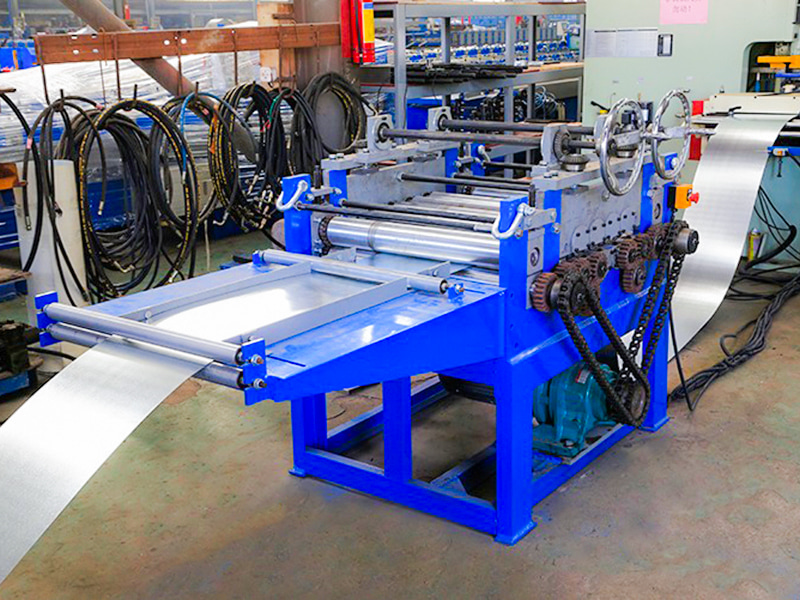 Steel Coil Leveling Machines for Roll Forming LinesPlacement after the uncoiler and before forming makes flatness preservation critical; HCL-200 to HCL-600 models handle 1.0–6.0 mm strip.View Product →
In most plants the leveler sits immediately after the uncoiler and ahead of the feed, punch or cut-to-length unit, and that position decides whether the flatness you paid for survives to the forming stand.
A stretch leveler needs room. The tension has to be reacted against something, either hydraulic clamps at each end of a sheet or bridle rolls at each end of a coil length, so a coil fed stretch line commonly needs 12 to 18 metres of floor space and runs slower than a roller leveler, often 20 to 60 m/min against 120 m/min or more.
Sequence matters as much as the machine. Leveling before slitting leaves the slit edges stress free, while leveling after slitting can pull new edge wave into the strip. Lines that arrange uncoiling, leveling, slitting and cut-to-length in different orders deliver noticeably different flatness from the same coil.
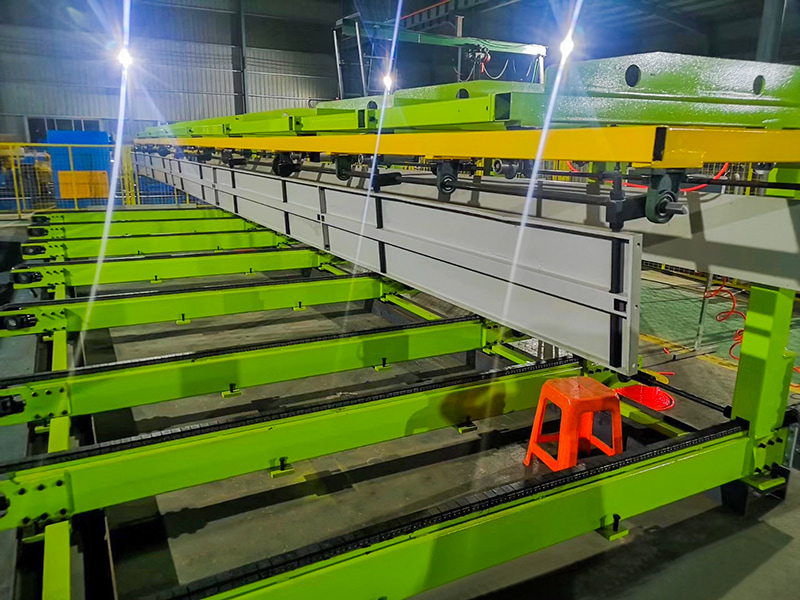 Steel Coil Cut-to-Length Line with Leveling and CuttingSequence-sensitive cut-to-length line combines uncoiling, multi-roller leveling, PLC fixed-length cutting and stacking for GI, PPGI, MS and stainless coils.View Product →
Mild steel from about 0.4 mm to 6 mm is the everyday working range for stretch leveling, and the process handles galvanized, prepainted, stainless and aluminium once tension and gripping are adjusted for the material.
| Material | Typical thickness | Notes for the buyer |
| Mild steel and HSLA | 0.4 to 6.0 mm | Standard duty, tension sized to yield strength |
| Galvanized and prepainted | 0.3 to 3.0 mm | Clamp and bridle marks have to be controlled |
| Stainless 304 and 316 | 0.5 to 4.0 mm | Higher tension, work hardening limits repeat passes |
| Aluminium 3003 and 5052 | 0.5 to 4.0 mm | Lower yield, surface marking is the main risk |
Two material issues catch buyers out. Stainless work hardens, so a second pass needs more tension than the first and many shops limit it to one pass. Aluminium marks easily, so bridle rolls and grippers need soft faces and clean surfaces.
A leveler should be sized to the worst material you will ever run, not to the average coil in the yard, because yield strength and thickness set the tension the machine has to deliver.
The surrounding line matters too. A correctly sized leveler fed by a badly aligned uncoiler will still produce camber, and a cut-to-length line with a worn shear reintroduces edge distortion after the leveler has done its work. Our technical knowledge section covers assembly, line set-up and maintenance in more detail.
 Simple Coil Flattening and Cutting Machine for Small WorkshopsEconomical two-in-one uncoiling, roller leveling and shearing machine for small-scale, low-budget sheet processing; manual operation and 10–15 m/min production speed.View Product →
No. Temper passing rolls the strip at a light reduction, usually 0.5 to 2 percent, which improves flatness and adds surface hardness. Stretch leveling applies tension past yield and does not change hardness. Some lines run both, in that order.
It corrects wave, buckle, coil set and camber up to a point. A coil with a mechanical kink, a crease, or a thickness variation that came from the rolling mill will still be out of tolerance afterwards. Check incoming shape with the supplier before assuming the leveler will save the order.
For mild steel, 0.1 to 0.5 percent is the usual window. Too little leaves coil memory in the strip, too much wastes yield and can affect the properties of thin high strength grades. The right figure depends on yield strength and on how much forming the strip will see downstream.
Yes, with care. Coating tolerates the strain well, but grippers, bridle rolls and guide surfaces must be clean and smooth to avoid marking. Many prepainted lines run coil to coil specifically to avoid clamp marks at the sheet ends.
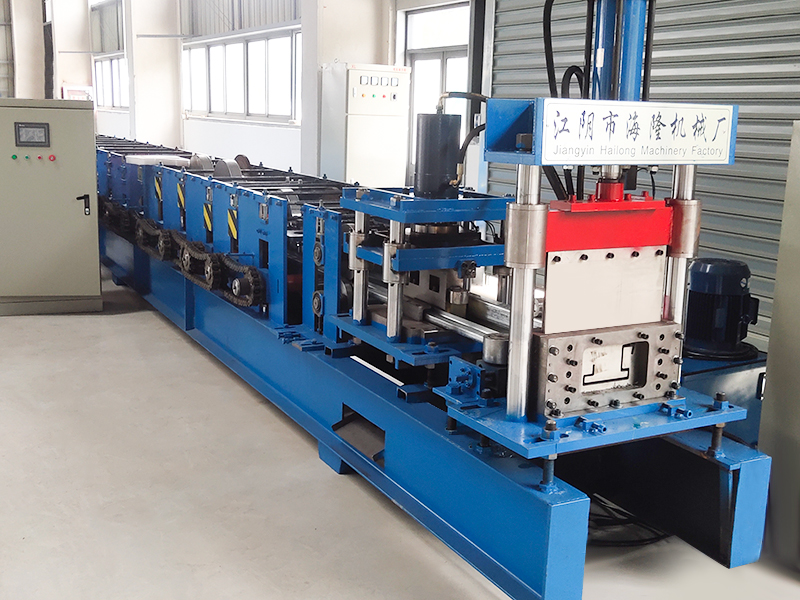
The flatpack container house top beam roll forming machine is specially tailored for the flatpack container roof structure production. Through high-pr...
See Detail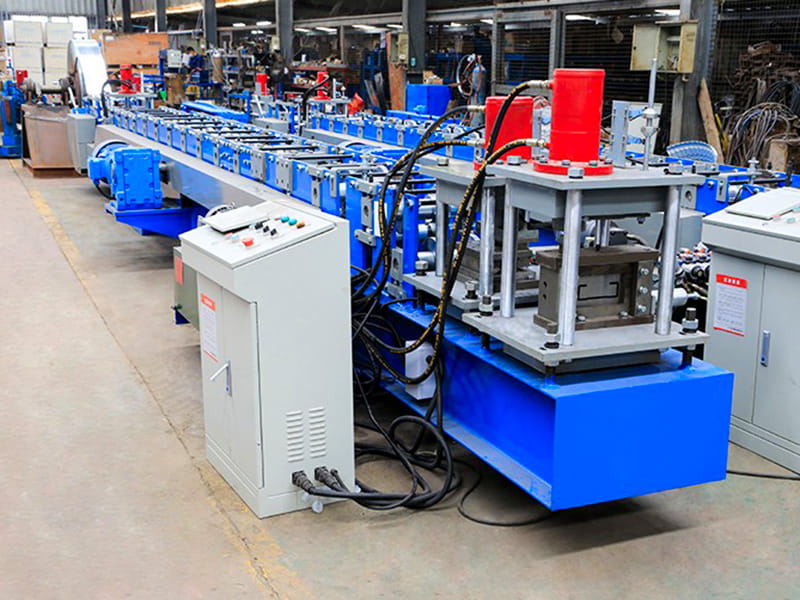
The C-purlin Roll Forming Machine is a core piece of specialized equipment in the manufacturing of steel structure building envelope systems. Using ga...
See Detail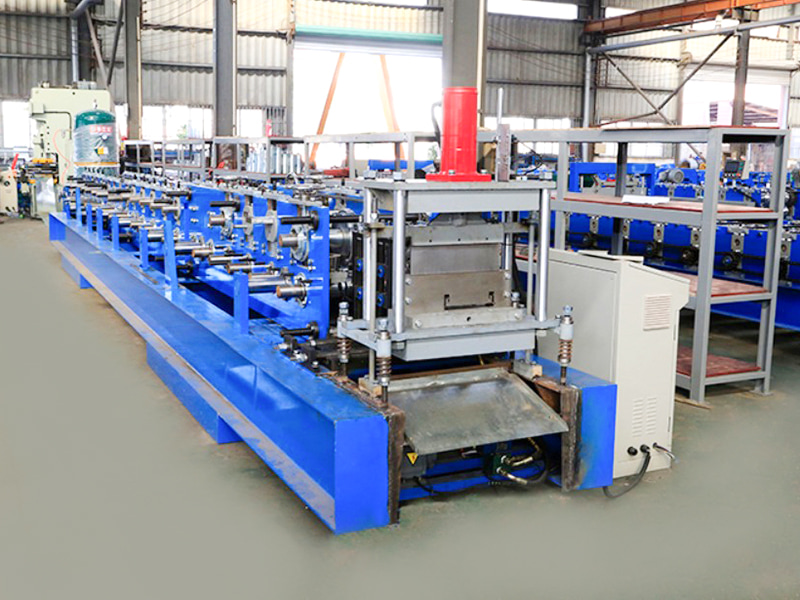
The Scaffold Industry Roll Forming Machines is an automated rolling machine specifically designed for the mass production of steel walkboards (scaffol...
See Detail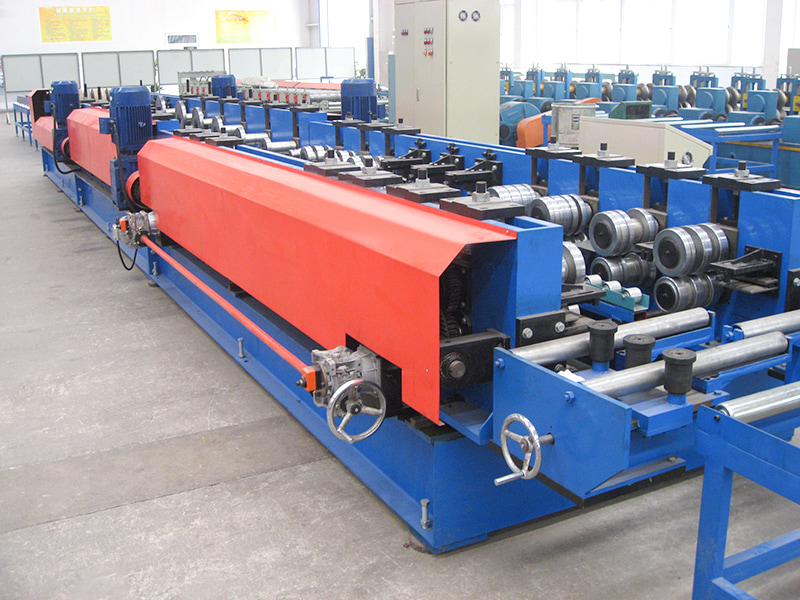
The cable tray roll forming machine is a fully automatic roll forming machine specifically designed for the mass production of metal support component...
See Detail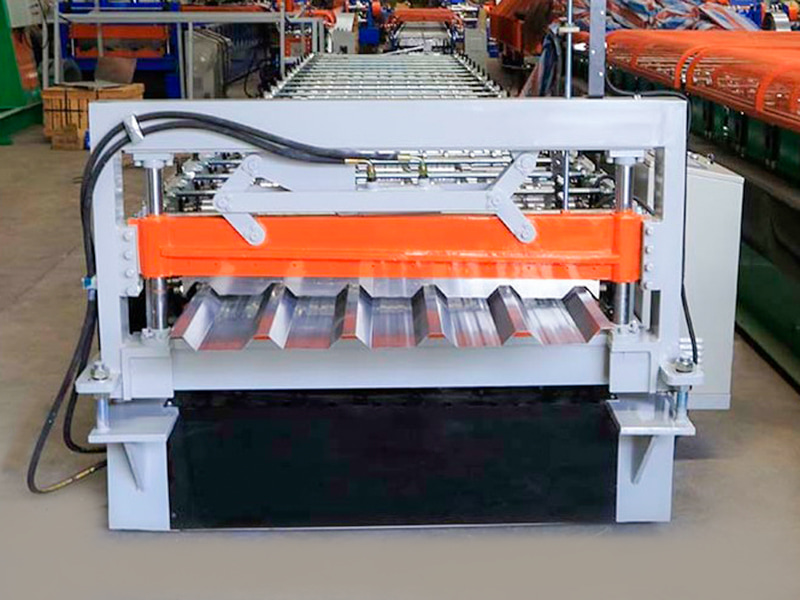
The high speed roofing sheet roll forming machine is a fully automatic sheet metal processing machine designed specifically for the construction indus...
See Detail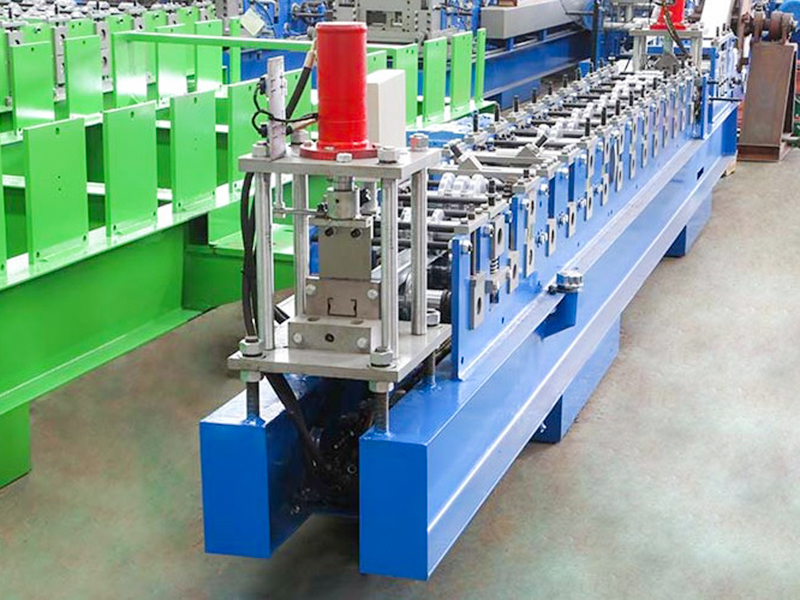
The Pallet Profile Roll Forming Machine is an intelligent rolling equipment specially used for producing the core components of all-steel pallets in l...
See Detail

Copyright ©Jiangyin Hailong Machinery Factory All rights reserved Roll Forming Machine Manufacturers
