

 English
 中文简体
中文简体 русский
 عربى
عربى
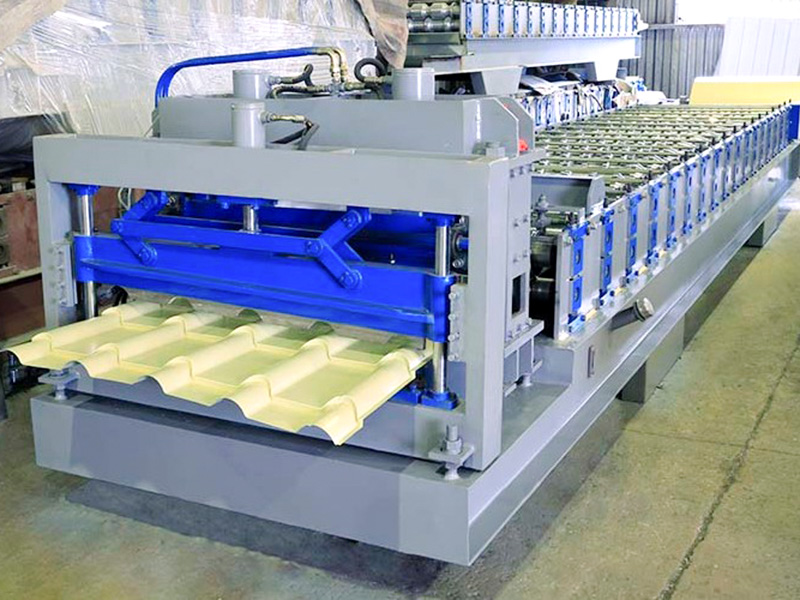
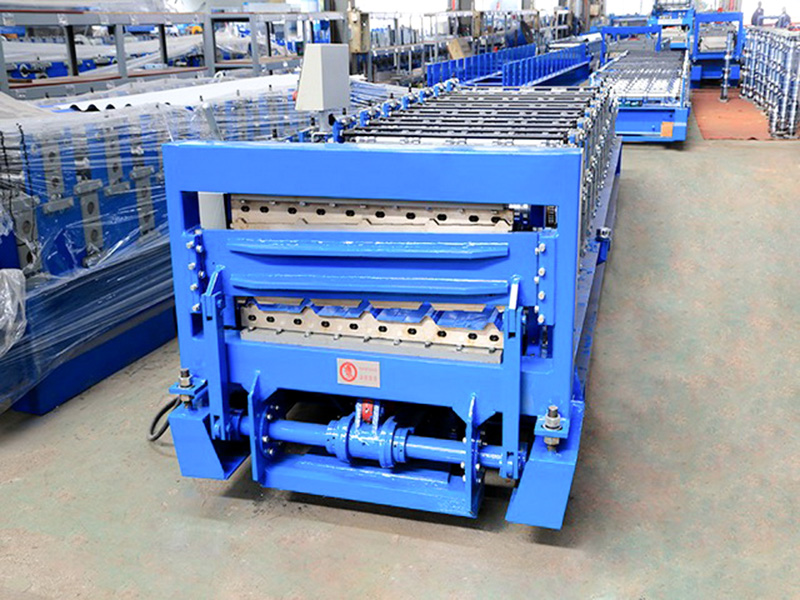
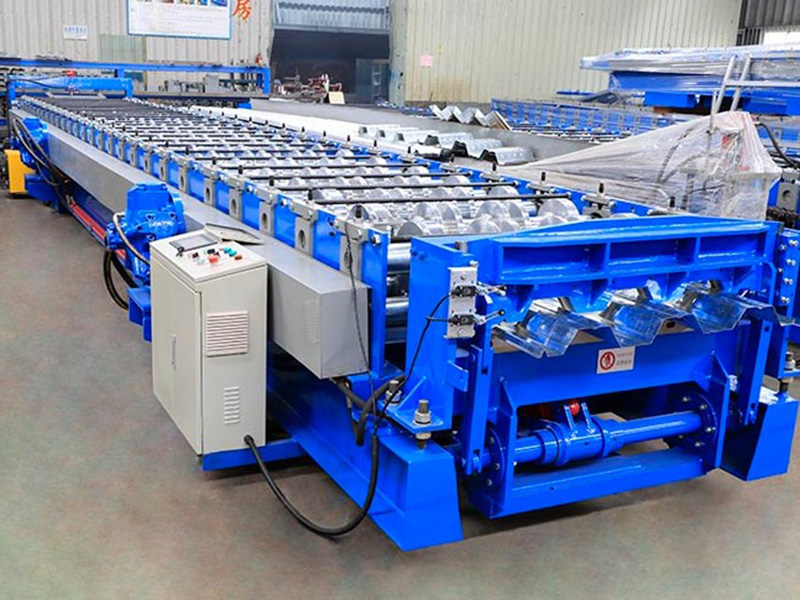
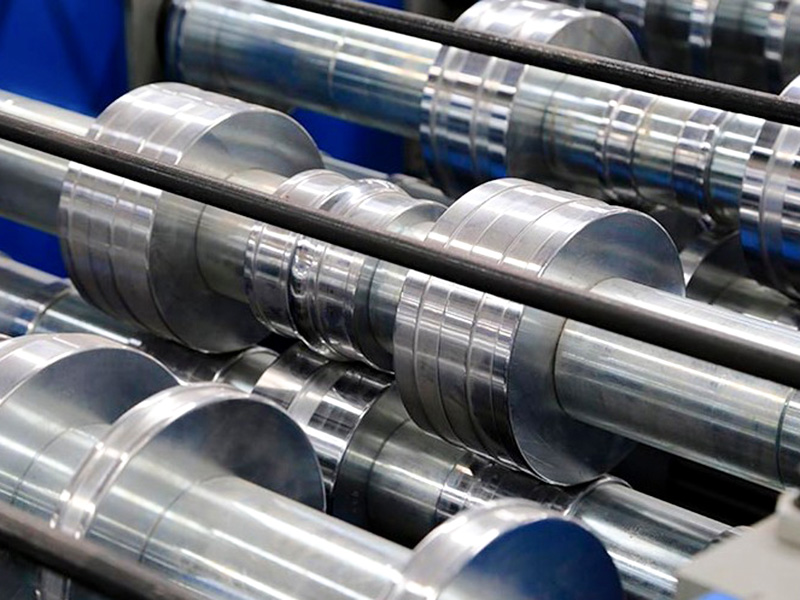
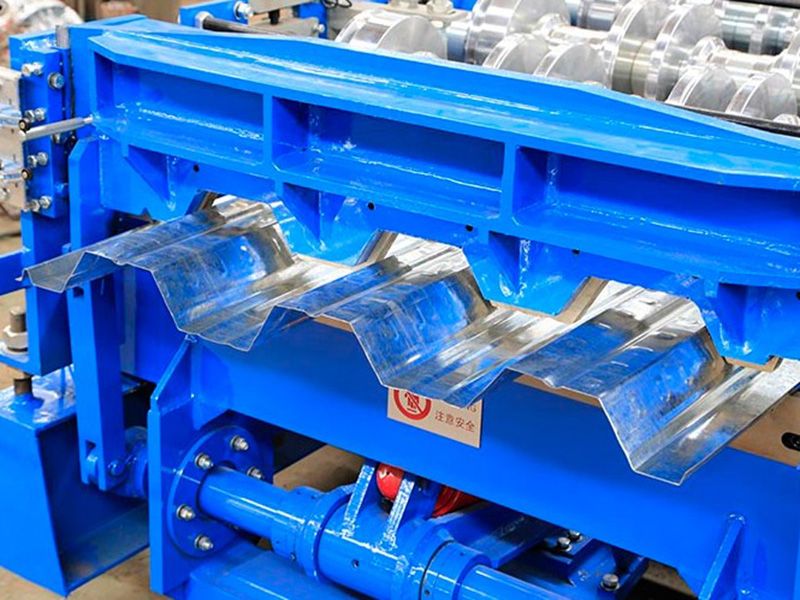
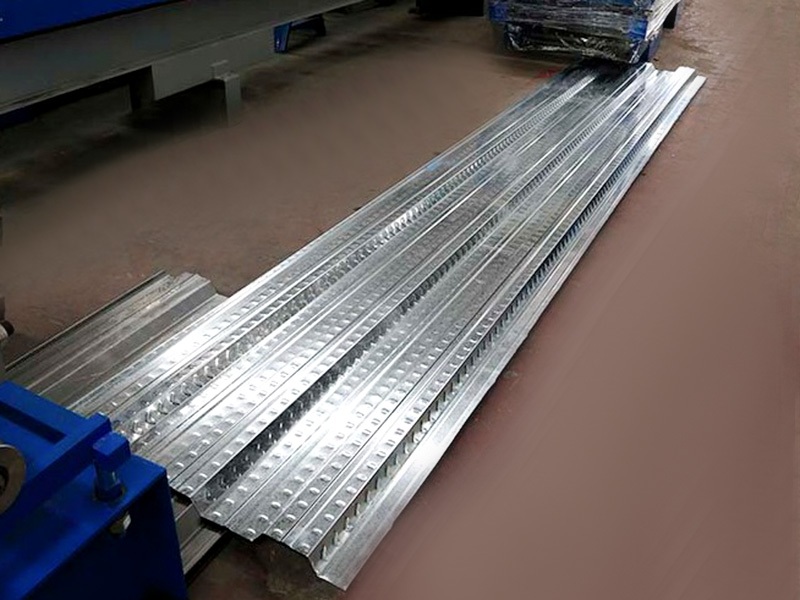
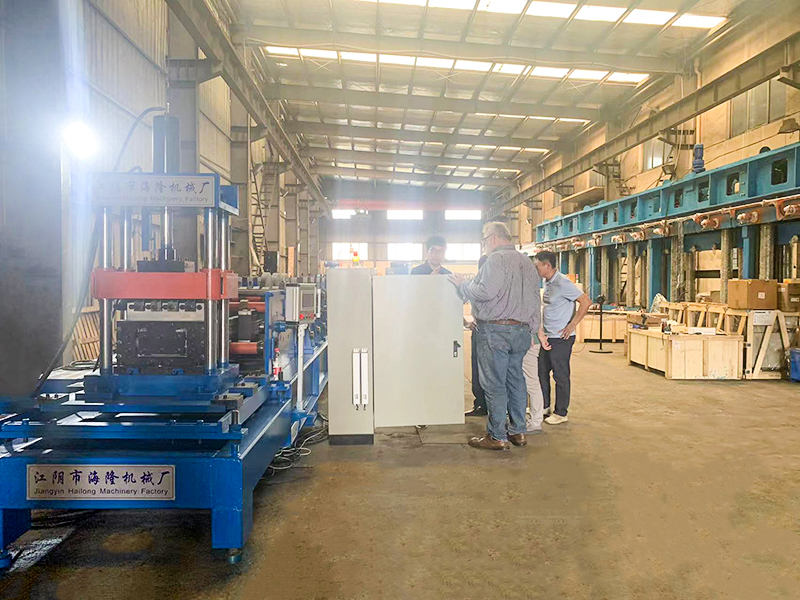
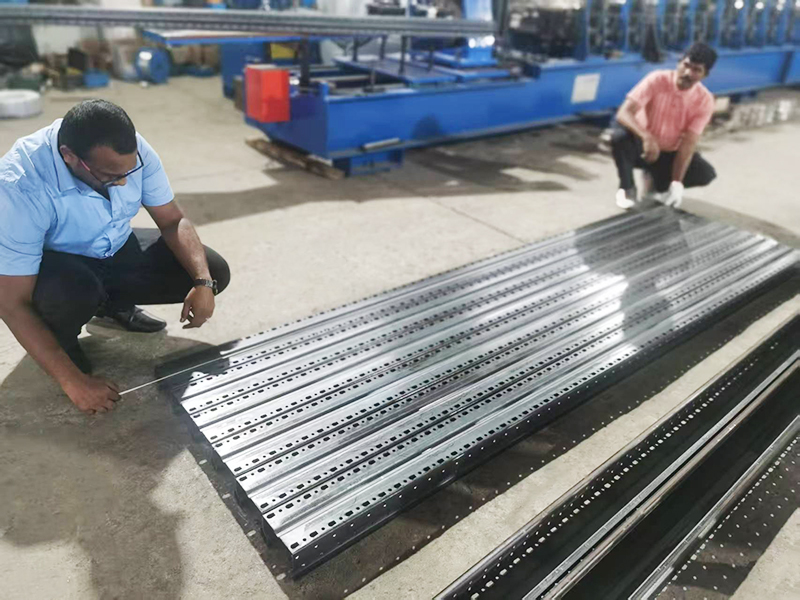
The 950-Type Floor Decking Roll Forming Machine is specialized equipment designed to process high-strength galvanized (or Al-Zn coated) steel coils into permanent concrete formwork for building floors—specifically, metal floor decking. The finished panels produced by this equipment are laid over steel beams; during construction, they serve as rigid bottom formwork for concrete pouring, while during the operational phase, they fully or partially replace the bottom tensile reinforcement of the floor slab. This equipment is vital for producing key structural components used in steel structures and composite building systems.
Fundamentally different from general-purpose machines used for lightweight roofing panels, the floor decking roll forming machine is classified as heavy-duty cold-forming equipment. Its design is engineered for high-strength materials (yield strength ≥ 345 MPa), significant thicknesses (≥ 0.8 mm), and deep profile rib heights (≥ 50 mm), with a particular emphasis on the shear bond performance between the steel panel and the concrete.
Jiangyin Hailong Cold Bending Machinery Technology Co., Ltd. is 950-Type Floor Decking Roll Forming Machine Supplier in China. With over 1200 customer relationships, we service a multitude of industries with custom roll forming equipment, supply 950-Type Floor Decking Roll Forming Machine for sale.
Equipment Components
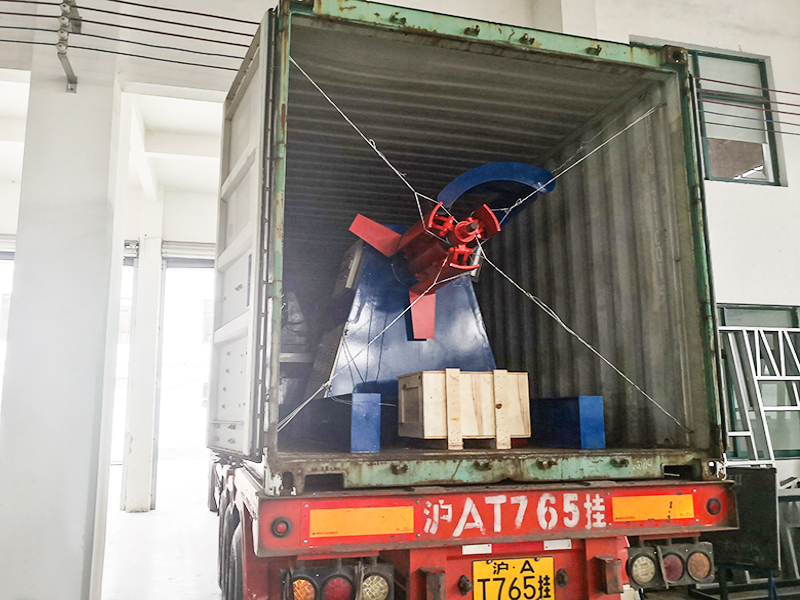
1). Hydraulic Uncoiler: Designed to support high-tonnage, high-strength steel coils, it features a high-torque hydraulic expansion/contraction mechanism and a powerful damping braking system.
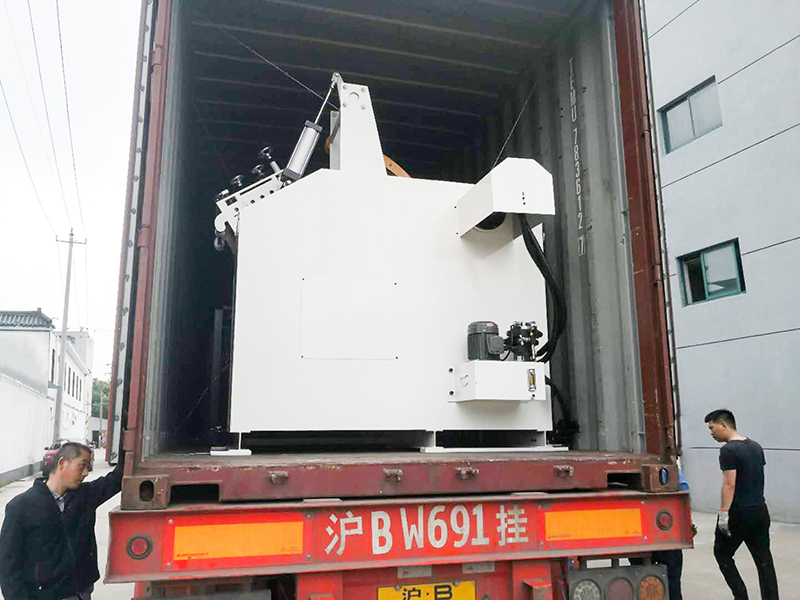
2). Multi-roller Heavy-duty Leveling and Feeding Unit (Core Component): To address the high internal stress inherent in high-strength steel coils, this unit is equipped with 7 to 9 large-diameter leveling rollers. It effectively eliminates coil warping and camber, ensuring the strip enters the main machine with high flatness and preventing jamming during the punching of thick panels.
3). Shear Indentation/Punching System (Critical Functional Component):
This is the defining feature that distinguishes the floor decking machine from standard roofing panel machines. To ensure an effective shear bond between the concrete and the steel panel (preventing slippage), the equipment incorporates specialized indentation rollers or a servo-controlled crescent-shaped punching unit on the flat sections of the panel. These create regularly spaced raised indentations or through-thickness shear holes on the panel ribs (crests or troughs). The indentation depth and punching dimensions are strictly calculated based on structural mechanics to meet the longitudinal shear capacity requirements for composite floor slabs as specified in the *Standard for Design of Steel Structures* (GB 50017).
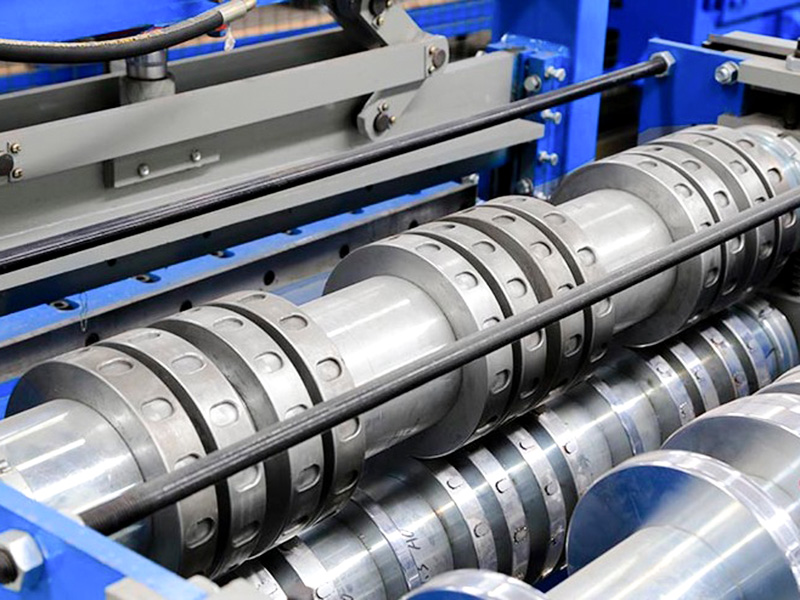
4). Main Roll Forming Unit: Features an extra-rigid, integral arch-style frame and is equipped with 16–22 progressive forming roll stations.
Flexural Rigidity: Designed to handle the characteristics of floor decking—specifically the deep rib profiles (typically 50–76 mm) and high material yield strength—the unit utilizes oversized alloy steel (42CrMo) main shafts (≥φ100 mm) and thickened side plates (≥40 mm) to withstand the immense lateral forces generated during forming.
Closed-Rib/Crimped Forming Section (Model-Specific): For closed-rib decking profiles (e.g., YXB65-185-555), the final stage incorporates a specialized horizontal interlocking roll system. This gradually curls and closes the open flanges, ensuring a perfect interlocking lock at the top of the profile.
5). Fixed-Length Cutting System: Engineered for thick, high-strength sheets, the system comes standard with either a heavy-duty hydraulic shear/punch (for thin sheets ≤1.2 mm) or a CNC flying saw (for thick sheets ≥1.5 mm). It delivers clean, burr-free cuts without deforming the cross-sectional profile at the sheet ends.
6.) PLC Control System: Equipped with an industrial-grade touchscreen and integrated algorithms that synchronize indentation spacing, punching sequences, and forming speeds; includes overload protection and real-time fault diagnosis capabilities.
Standard Process Flow:
Uncoiling → Heavy-duty leveling and feeding → Flat-section shear-indentation/punching → Multi-stage deep-rib roll forming (including closed-rib interlocking) → Heavy-duty fixed-length cutting → Automatic unloading and stacking
Technical Parameters
| Item | Parameter | Remark |
| Machine Base | National standard No.45 I-beam steel | Overall welding structure |
| Roller material | High quality 45# steel | Fine-machining, Quenched, coated with hard chrome |
| Main Shaft | φ80,45# steel | Fine-machining, Quenched |
| Forming groups | 20 | |
| Main motor power | 15KW | |
| Drive method | Chain drive | |
| Cut-off mode | Hydraulic cut-off | Hydraulic station motor power is 5.5KW |
| Cut blade | Cr12MoV | Quenched, HRC58-62 |
| Uncoiler | Load 5-Ton, with loading platform | Hydraulic station motor power is 2.2KW |
| Control system | Simens/Scheider PLC | |
| Hydraulic system | BeiJin Huade brand | |
| Total length of production line | Around 20 meters | |
| Equipment weight | Around 9-Ton | |
| Raw material thickness | 0.8-1.5mm | Q235 galvanized coil |
| Production speed | 15~20m/min |