

 English
 中文简体
中文简体 русский
 عربى
عربى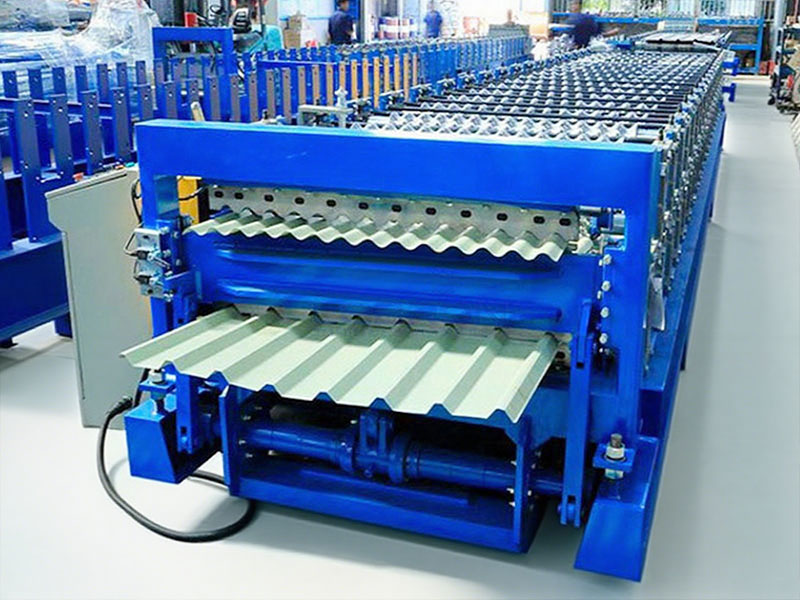
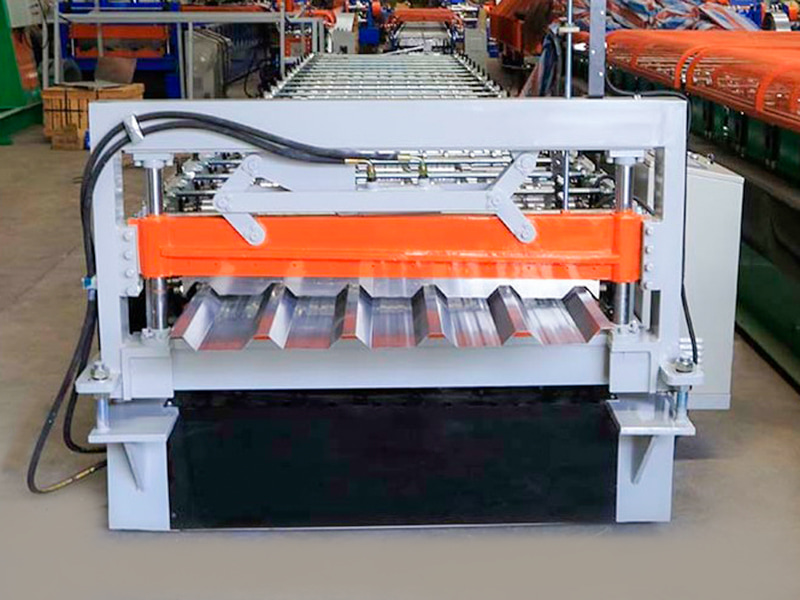
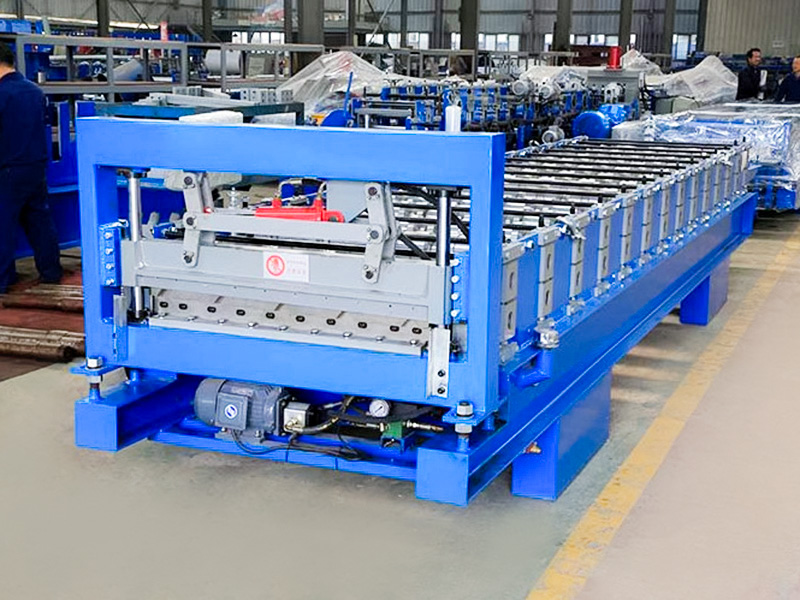
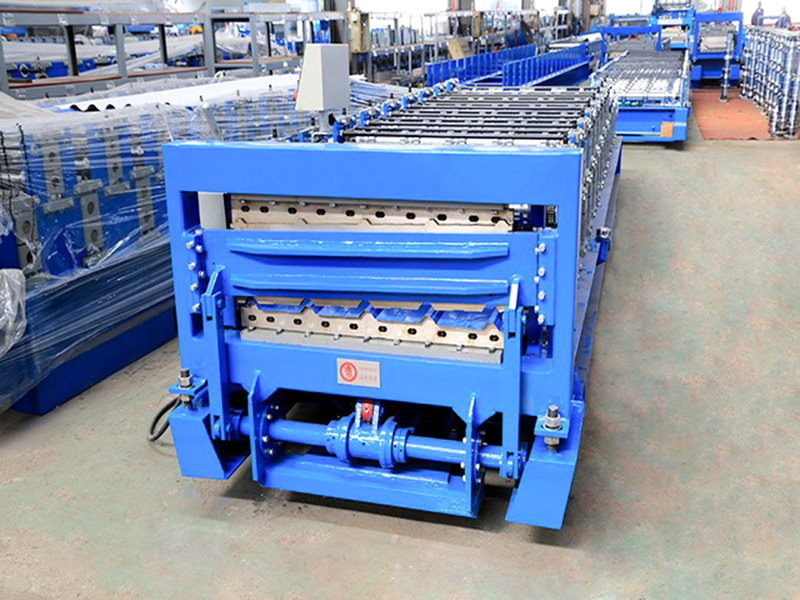
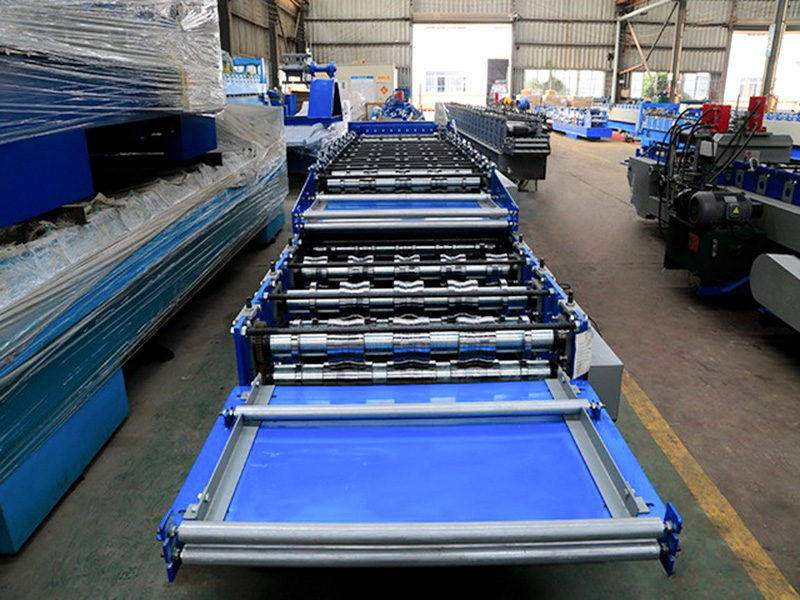
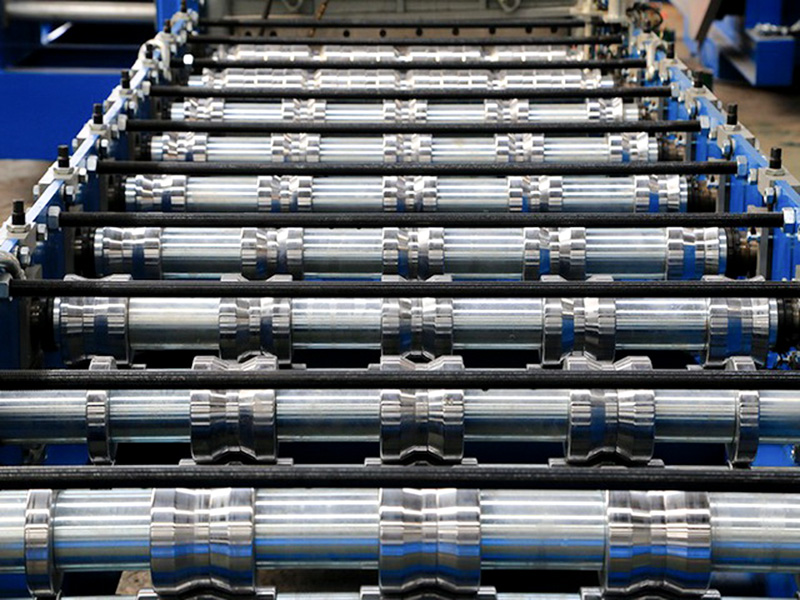
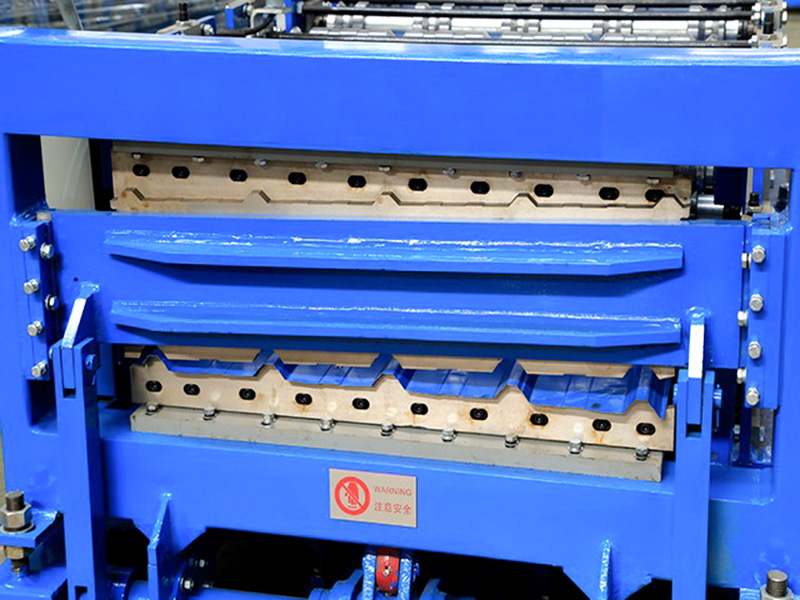
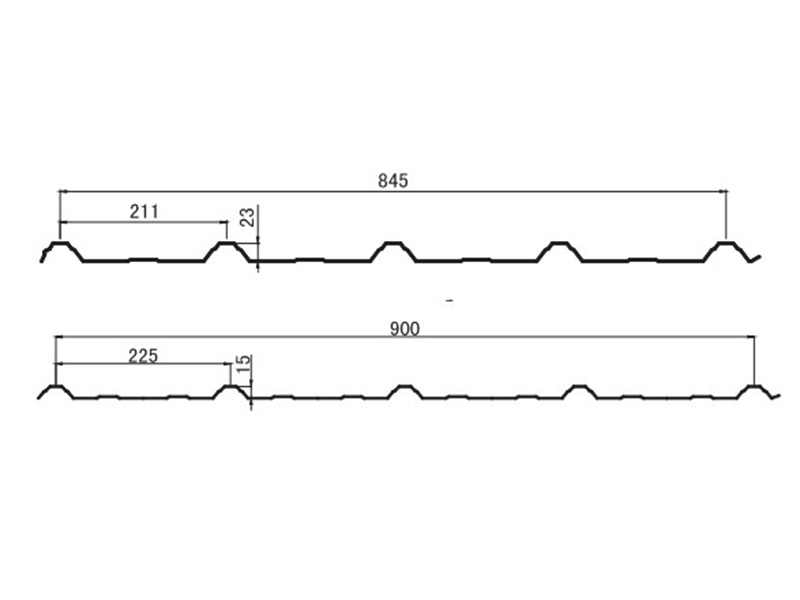
The 845/900-Type Double Layer Roofing Sheet Roll Forming Machine is a composite system that integrates two sets of roll-forming tooling—designed for IBR profiles with effective coverage widths of 845mm and 900mm—into the upper and lower levels of a single, extra-tall machine frame.
This equipment is specifically designed to resolve the conflict between limited workshop space and the need for product line diversification faced by metal profiled sheet manufacturers. The upper and lower levels correspond to two IBR profiles widely used in the international market, allowing a single machine to deliver the production capacity and value of two dedicated machines. The IBR panels produced feature distinct, sharp-edged box-rib structures, combining high load-bearing strength with efficient drainage capabilities.
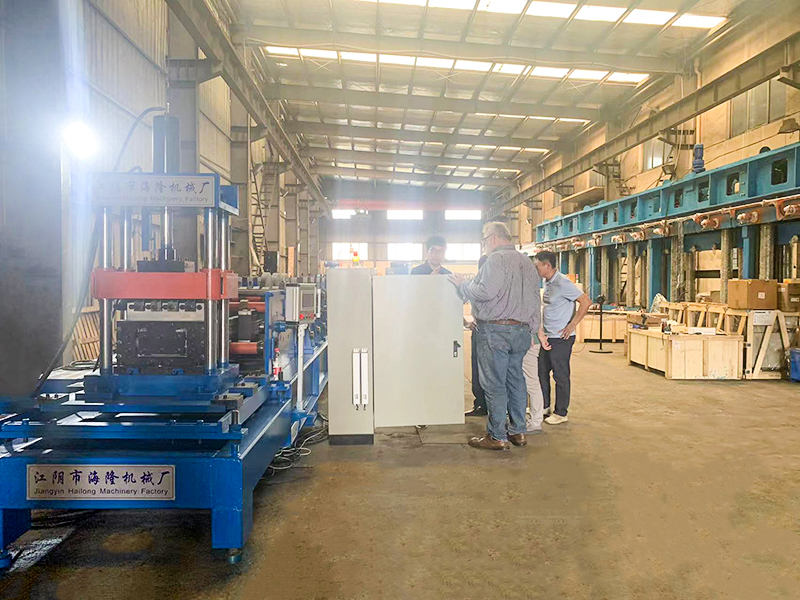
Jiangyin Hailong Cold Bending Machinery Technology Co., Ltd. is 845-900-Type Double Layer Roofing Sheet Roll Forming Machine Supplier in China. With over 1200 customer relationships, we service a multitude of industries with custom roll forming equipment, supply 845-900-Type Double Layer Roofing Sheet Roll Forming Machine for sale.
Equipment Components
1). Hydraulic Uncoiler: Designed to handle heavy-tonnage color-coated steel coils, it features hydraulic expansion/contraction and powered auxiliary feeding to ensure smooth material transition when switching between the upper and lower levels.
2). Leveling and Guiding System: Utilizes a leveler with widened roll faces combined with a high-precision hydraulic Edge Position Control (EPC) device to ensure the strip enters both the upper and lower roll systems straight and centered.
3). Dual-Layer Roll Forming Main Unit (Core Structure):
Frame: Constructed from welded, thickened steel plates with a significantly increased height compared to single-layer machines; key load-bearing areas are reinforced with transverse tie-bars and diagonal braces to withstand the complex torsional forces generated during dual-layer forming.
Upper Roll System (Model 845): Configured with 12–14 stations of specialized IBR forming rollers to produce IBR panels with an effective width of 845mm.
Lower Roll System (Model 900): Configured with 12–14 stations of independent IBR forming rollers to produce IBR panels with an effective width of 900mm.
Upper/Lower Drive System: Shares a single high-power main motor and gearbox; electromagnetic clutches enable independent switching between the upper and lower roll systems, ensuring that one level remains stationary while the other operates, thereby preventing wasted energy and unnecessary wear on the roll surfaces. 4). Independent dual-station hydraulic cutting system (key configuration): The equipment features separate hydraulic shearing units for the upper and lower layers. The upper cutter is fixed to the top of the frame and the lower cutter to the bottom, with each performing independent length-cutting operations. This completely eliminates precision issues—such as increased guide clearance or skewed cuts—often caused by sharing a single lifting cutter mechanism.
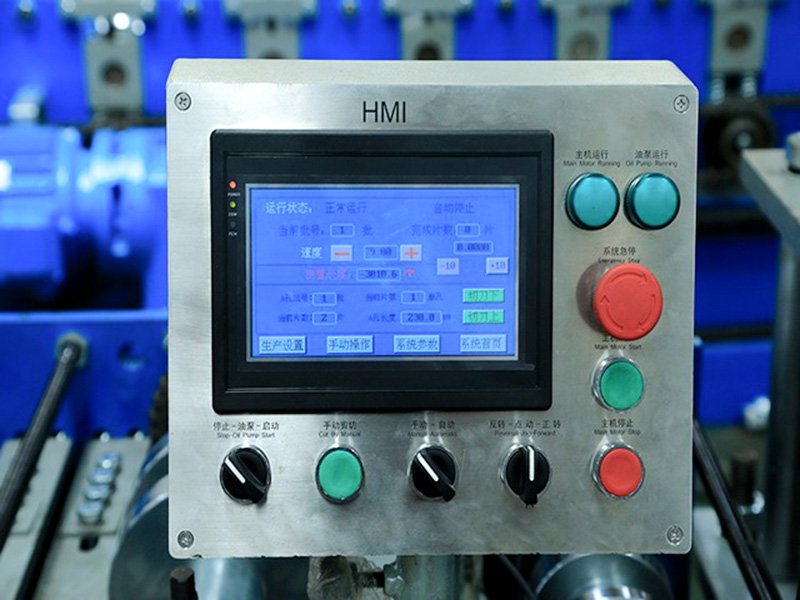
5). Fully automatic PLC dual-mode control system: Equipped with a large touchscreen and built-in parameter libraries for both 845 and 900 profiles (including roll gap, length compensation, and cutting delay). Production modes can be switched with a single touch, and the fool-proof design effectively prevents operational errors.
Standard Process Flow:
Uncoiling → Leveling and strip guiding → Feeding into the designated layer (upper/lower) → Multi-pass IBR box-rib roll forming → Independent station hydraulic length-cutting → Finished panel collection
Core Technical Advantages
1). Two profiles in one machine, 50% space cost reduction: Capable of producing both 845 and 900 IBR panels within a workshop length of only 18–25 meters. Compared to installing two separate single-layer machines side-by-side, it saves approximately 40%–50% of floor width and requires an initial investment equivalent to only "1.5" single-layer machines—making it ideal for high-rent workshops or asset-light operations by export traders.
2). Profile-specific tooling for sharp IBR contours: The upper and lower roll sets are independently designed based on the specific developed width and rib height of each profile. Specialized roll tooling ensures crisp, sharp transitions between the characteristic "wide, flat crests" and "narrow, deep troughs" of the IBR panel, eliminating rounded or collapsed corners. This maximizes the panel's moment of inertia, resulting in superior roof load-bearing capacity compared to universal interchangeable models.
3). Wide-profile deflection resistance and anti-drift capability: To accommodate the wide raw material used for IBR profiles (typically 1000mm–1100mm), both the upper and lower main shafts utilize large-diameter alloy steel supported by high-density bearings. This design effectively minimizes radial deflection (bending) caused by the wide-profile roll forming process, ensuring uniform rib height across the panel width and guaranteeing tight, leak-proof overlaps.
4). Independent cutting for superior edge quality: The use of independent upper and lower cutters eliminates mechanical clearance accumulation issues associated with systems where a single cutter travels vertically. Whether producing 845 or 900 profiles, the cut edges remain straight and burr-free—making the system particularly well-suited for overseas projects with strict requirements for cutting precision.
Technical Parameters
| Item | Parameter | Remark |
| Machine Base | National standard No.45 I-beam steel | Overall welding structure |
| Roller material | High quality 45# steel | Fine-machining, Quenched, coated with hard chrome |
| Main Shaft | φ75,45# steel | Fine-machining, Quenched |
| Forming groups | 12/20 steps | |
| Main motor power | 7.5KW | |
| Drive method | Chain drive | |
| Cut-off mode | Hydraulic cut-off | Hydraulic station motor power is 4KW |
| Cut blade | Cr12MoV | Quenched, HRC58-62 |
| Uncoiler | Load 5-Ton, with loading platform | Hydraulic station motor power is 2.2KW |
| Control system | Simens/Scheider PLC | |
| Hydraulic system | BeiJin Huade brand | |
| Total length of production line | Around 20 meters | |
| Equipment weight | Around 8-Ton | |
| Raw material thickness | 0.3-0.8mm | Q235 galvanized coil |
| Production speed | 15~20m/min |