


 English
 中文简体
中文简体 русский
 عربى
عربىYX66-470 Highly Specific Standing Seam Roll Forming Machine
Compared with the common roofing sheet roll forming machine, the standing seam roll forming machine has a smaller body size, but the rolling tools are...
See DetailContent
A 0.4 mm galvanized strip that measures 0.38 mm at the coil eye and 0.43 mm at the tail will never produce a stable formed channel, no matter how carefully the rolls are shimmed. That single number, gauge variation, explains why one precision strip line holds ±0.1 mm on the finished profile while another drifts through an entire shift.
The short answer comes first: custom roll forming for precision strips is a three-part system. The strip must arrive inside a tight envelope, the flower design and roll tooling must respect the material's springback and edge limits, and the machine frame, shafting and cut-off must be stiff and repeatable enough to preserve what the tooling creates. Improving only one of the three usually moves the defect somewhere else, from the forming station to final assembly or to the scrap bin.
Most problems reported as "machine trouble" start at the coil. Strip that varies in thickness, carries camber, or has a burr on one edge will produce a profile that varies in height, bows along its length, or marks the rolls. Before pass counts are discussed, the incoming material has to be defined.
Gauge matters more than most buyers expect, because springback scales with thickness and yield strength. On 0.5 mm stock, a ±0.05 mm window is already ±10% of the material thickness. A coil running at the low end of that window forms a shallower leg than one at the high end, so a single line fed from two coils of the same nominal grade can turn out parts that differ by 0.1 to 0.2 mm on flange height.
| Strip property | Precision target | General commercial | What it affects |
|---|---|---|---|
| Thickness | ±0.02 mm | ±0.05 to ±0.10 mm | Springback and formed height |
| Width | ±0.05 mm | ±0.15 to ±0.30 mm | Bend line position and edge clearance |
| Camber | ≤1 mm over 2 m | ≤3 mm over 2 m | Bow in the finished profile |
| Flatness | ≤5 I-units | 8 to 12 I-units | Twist and flange wave |
| Edge burr | ≤0.05 mm, deburred | Visible burr accepted | Roll marking and tool wear |
| Coil set | Minimal | Often noticeable | Leveler workload and line stability |
Edge condition deserves its own line in the purchase order. Slitting a narrow strip from a wide coil is common and economical, but slitting introduces edge stress and camber that the forming line inherits. Mill edge strip costs more and behaves better on narrow, thin profiles where a small edge defect is a large share of the section.
Coil set and crossbow are not cosmetic either. A strip that arrives with a visible curl keeps that memory through the first passes and reappears as bow in a 3 m length. Removing it before forming is far cheaper than trying to bend it out afterward.
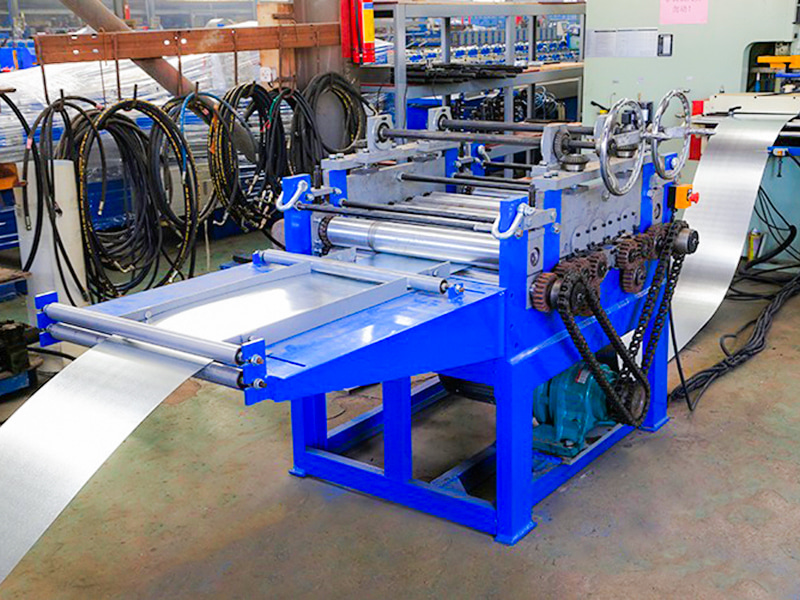 Steel Coil Leveling MachinesFrame: A sturdy frame structure.View Product →
The sequence ahead of the forming station — uncoiling, leveling, slitting and cut-to-length — is where strip defects are either corrected or passed downstream, so it deserves the same attention as the roll tooling.
Once the strip is under control, four machine-side decisions set the practical tolerance band.
A precision profile usually needs 16 to 24 passes, with bend increments of roughly 3 to 8 degrees per station. Fewer passes mean larger increments, higher edge strain and wider scatter in the finished angle. Light overbend of 1 to 3 degrees compensates springback, and the internal radius should stay at or above one times material thickness on coated strip so the zinc or paint film does not crack. The early passes decide the outcome: once an edge is stretched into a wave, no later station removes it.
Rolls are commonly made from GCr15 or Cr12MoV, hardened to HRC 58 to 62, ground and polished, and hard-chrome plated when running galvanized or pre-painted strip to limit zinc pickup. Gap is set close to the strip thickness with a small clearance, but that setting drifts as zinc dust and dirt build on the roll face, which is one reason a line that was accurate in week one is out of tolerance in month three.
Shaft diameter on strip lines typically runs from 60 to 100 mm. Narrow strip with a high width-to-thickness ratio tends to twist and sag between passes, so side rollers and pass supports with 0.05 to 0.1 mm clearance are often necessary. Frame thickness and bearing class decide how much the profile moves when the line is loaded at full speed rather than idling.
Stop-and-cut setups hold around ±1 mm at 12 to 25 m/min and suit short runs and heavy sections. A servo flying shear costs more and supports 40 to 90 m/min with ±0.5 mm length accuracy. Thermal drift is the quiet risk: after one to two hours at load, the frame and hydraulic oil warm up and dimensions can shift by 0.05 to 0.1 mm. Samples should be approved both cold and warm, with a capability check across a full shift.
| Formed feature | Standard build | Precision build | Main dependency |
|---|---|---|---|
| Cross-section size | ±0.3 mm | ±0.1 mm | Rigid shafts and stable gauge |
| Bend angle | ±1.5° | ±0.5° | Overbend and pass count |
| Twist | ≤1.5° per meter | ≤0.5° per meter | Strip flatness and side guides |
| Bow and camber | ≤2 mm per meter | ≤0.5 mm per meter | Coil camber and leveling |
| Cut length | ±2 mm | ±0.5 mm | Stop-cut versus servo shear |
| Hole pitch | ±1.0 mm | ±0.3 mm | Servo feed with in-line punching |
Buying a precision strip line is easier when the questions are asked in the right order.
Where the section falls outside a standard catalogue — an unusual lock seam, a trapezoid rib, or a profile with an asymmetric flange — it is worth treating the flower as a development project rather than a copy of the nearest machine. Suppliers who build customized roll forming machines will normally run a strip sample and simulate the passes before the rolls are cut, which is far cheaper than correcting hardened tooling later.
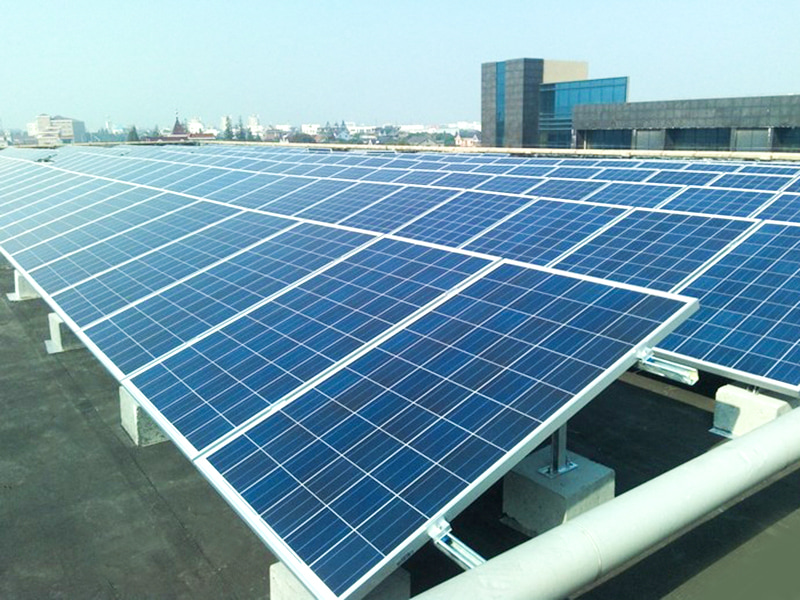 Solar Strut Channel Roll Forming MachinesCore Functions and Technical Features:View Product →
Strut channel is a good illustration of where all three variables meet: the strip is narrow, the section is closed on itself, and the finished channel has to accept a nut and bolt at the job site without reaming.
Thin-gauge building profiles are the classic case. Studs and tracks rolled from 0.5 to 1.2 mm galvanized strip are assembled by hand on site, and a leg that varies by half a millimeter shows up as a loose fit or a screw that strips its thread. The same logic applies to door frames, rack uprights, cable tray side rails, strut channels, pallet profiles and garden edging, all of which are formed from comparatively narrow strip at output rates where one rejected part per hundred is a real cost.
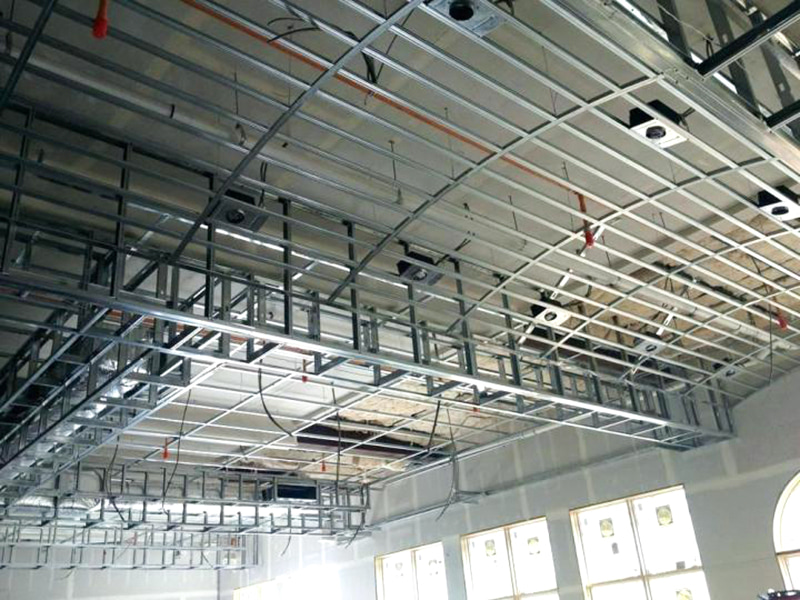 Steel Stud and Track Roll Forming MachinesEquipment Classification:View Product →
Solar mounting rails and rack uprights add a second requirement: hole positions have to line up with brackets made elsewhere. That moves accuracy from the forming station to the servo feed and punch unit, and it is usually the reason a buyer moves from a standard line to a precision one.
Disputes on strip lines tend to follow the same pattern: the drawing was agreed, the acceptance method was not.
Tooling cost per profile also deserves an honest look. A line that runs four profiles is cheaper with quick-change cassettes and two roll sets than with a single dedicated set and a long changeover every week.
Precision strip projects rarely fail because a machine cannot bend metal. They fail because the coil was specified loosely, the flower was compressed into too few passes, or the cut-off was chosen for speed instead of length accuracy. Send a supplier three things — a dimensioned profile drawing with tolerances, the real strip specification you intend to buy, and the output you need per shift — and the discussion shifts from price to capability, which is where a precision line should be judged.
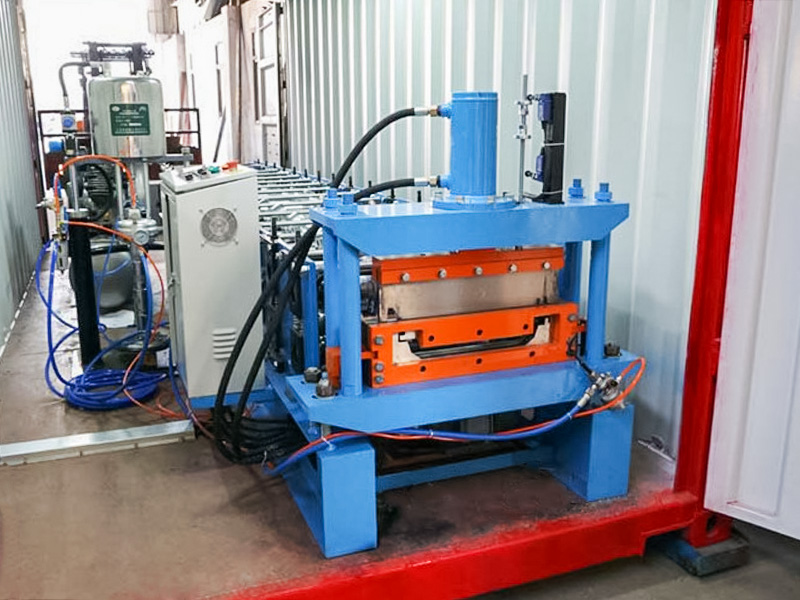
Compared with the common roofing sheet roll forming machine, the standing seam roll forming machine has a smaller body size, but the rolling tools are...
See Detail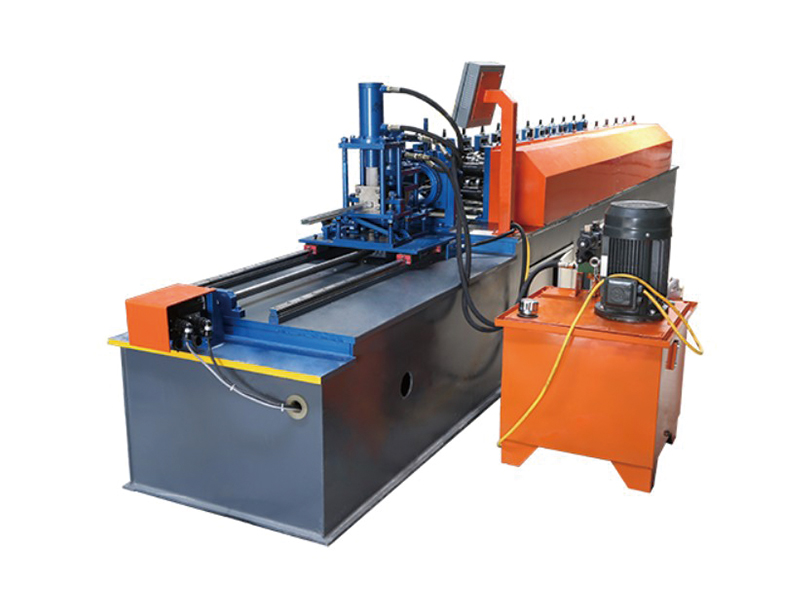
Steel Stud and Track Roll Forming Machines are automated machines specifically designed to continuously cold-bend and plastically deform continuous co...
See Detail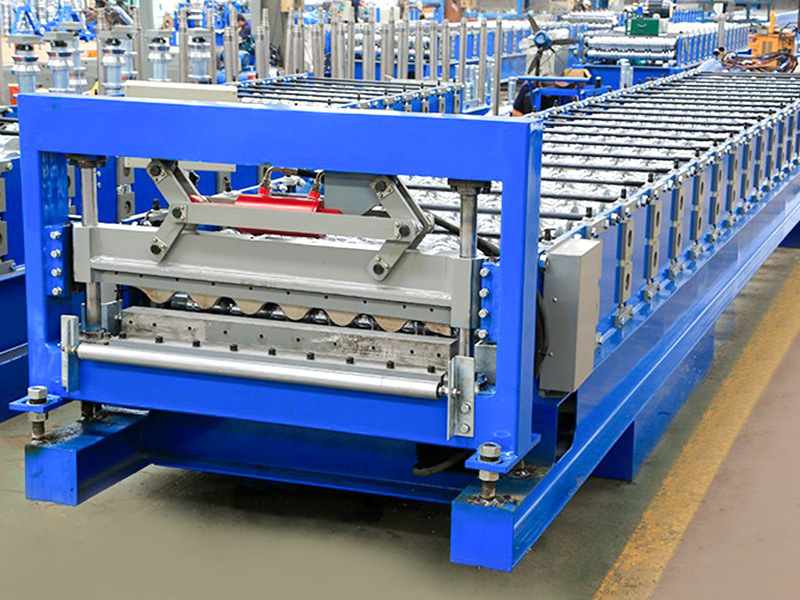
The YX36.5-780 corrugated sheet, with its moderate corrugated height and effective width, strikes an excellent balance between strength, cost-effectiv...
See Detail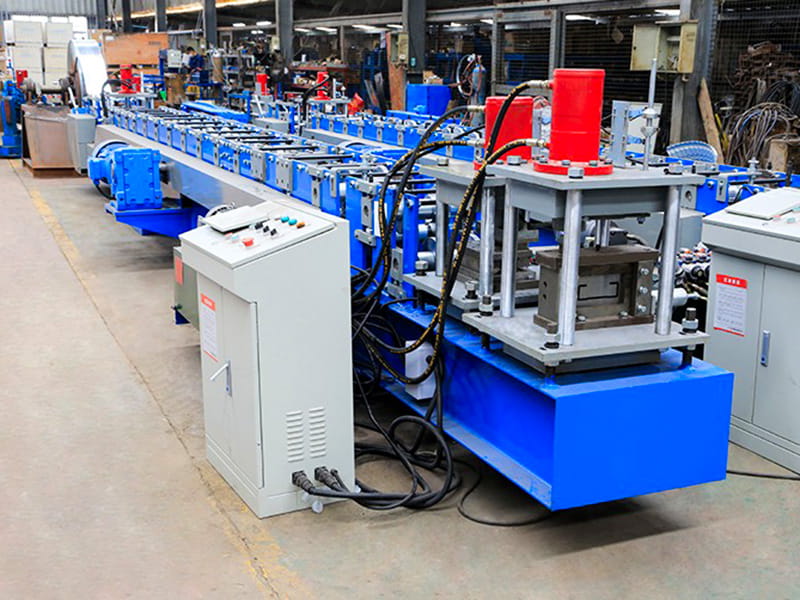
The C-purlin Roll Forming Machine is a core piece of specialized equipment in the manufacturing of steel structure building envelope systems. Using ga...
See Detail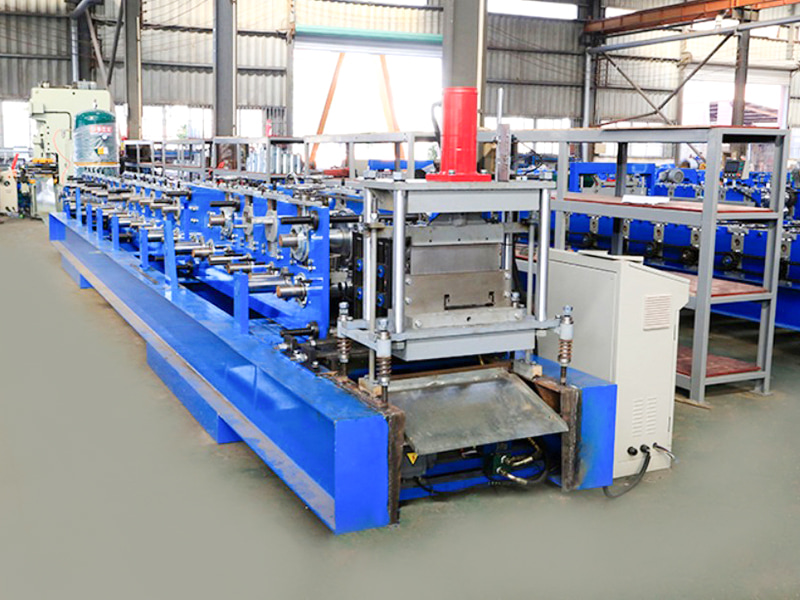
The Scaffold Industry Roll Forming Machines is an automated rolling machine specifically designed for the mass production of steel walkboards (scaffol...
See Detail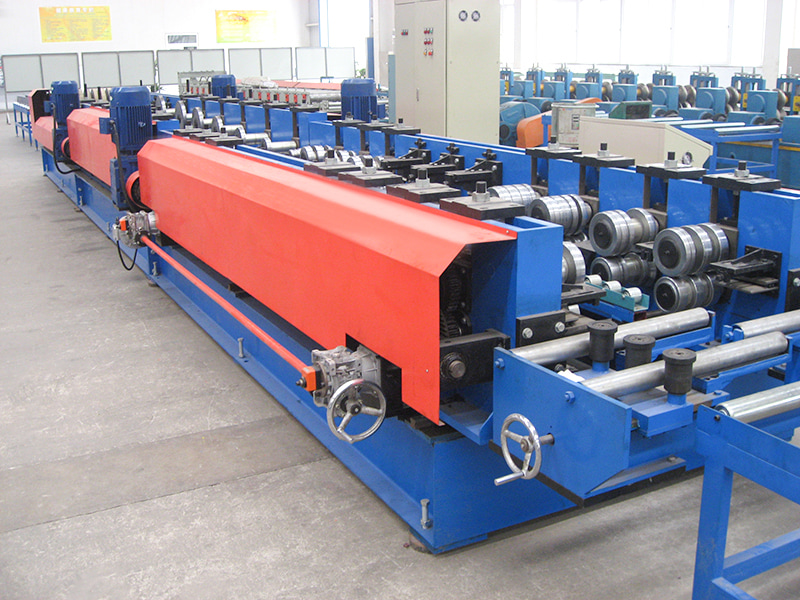
The cable tray roll forming machine is a fully automatic roll forming machine specifically designed for the mass production of metal support component...
See Detail

Copyright ©Jiangyin Hailong Machinery Factory All rights reserved Roll Forming Machine Manufacturers
