


 English
 中文简体
中文简体 русский
 عربى
عربىSteel Stud and Track Roll Forming Machines
Steel Stud and Track Roll Forming Machines are automated machines specifically designed to continuously cold-bend and plastically deform continuous co...
See DetailContent
A C purlin roll forming machine is the backbone of efficient steel frame manufacturing, converting master coils into ready-to-install C-channels in a single automated line. Instead of labor-intensive cutting, punching, and welding, this equipment uses a continuous cold bending process that leaves material utilization as high as 99%. One machine can match the daily output of 30 skilled workers, dramatically shortening project lead times. Quality is inherently built into the process: every purlin exits the line with identical dimensions and hole patterns, eliminating the risk of on-site rejections. For builders and manufacturers, the immediate benefit is a lower cost per purlin combined with the flexibility to produce both standard and custom profiles on demand.
The process starts with a decoiler feeding flat steel strip through a series of precisely engineered roller stations. Each set of rollers incrementally shapes the strip into a C-profile with defined web, flange, and lip dimensions. Because the metal is formed at room temperature, its yield strength is not compromised, an essential factor for load-bearing purlins. Typical forming speeds range from 15 to 30 meters per minute, allowing a single shift to produce thousands of linear meters. A flying cut-off saw synchronized with the line speed slices purlins to the programmed length without stopping production. This uninterrupted workflow ensures every piece from the coil is exactly the same, whether the order is for 100 pieces or 10,000.
Modern C purlin machines handle a wide dimensional envelope. Typical ranges accommodate heights of 100 to 300 mm, web widths of 40 to 80 mm, and material thicknesses from 1.0 to 3.0 mm. While volume production often targets common sizes like H100x50x15x2.0, the real versatility lies in quick changeovers. Adjusting roll tooling and cutting parameters to switch from a standard purlin to a typhoon-resistant reinforced profile can be completed in under two hours. A summary of frequently produced dimensions is shown below.
| Parameter | Range |
|---|---|
| Height (mm) | 100 – 300 |
| Web Width (mm) | 40 – 80 |
| Thickness (mm) | 1.0 – 3.0 |
| Max Length (m) | 12 (joint-free) |
Beyond these dimensions, slotting and punching patterns can be customized for solar panel mounting rails or other specific connections.
Switching from traditional fabrication to roll forming generates measurable savings across multiple cost centers.
These factors together can reduce the per-meter cost of finished purlins by a significant margin while improving on-site installation speed.
Built-in quality controls are integral to the roll forming line. Encoder-measured length control and hydraulic post-cutting systems hold length tolerances within plus or minus 1 mm. Each purlin undergoes automatic straightness and profile scanning, so 100% of the output is verified before leaving the factory. This eliminates the risk of mixed or substandard pieces on the building site. Machines can be set up to produce purlins compliant with American AISI specifications and Australian AS1397 standards, covering chemical composition, coating mass, and mechanical properties. For projects requiring extreme length without splicing, the line forms continuous 12-meter purlins that improve roof integrity and shorten erection cycles.
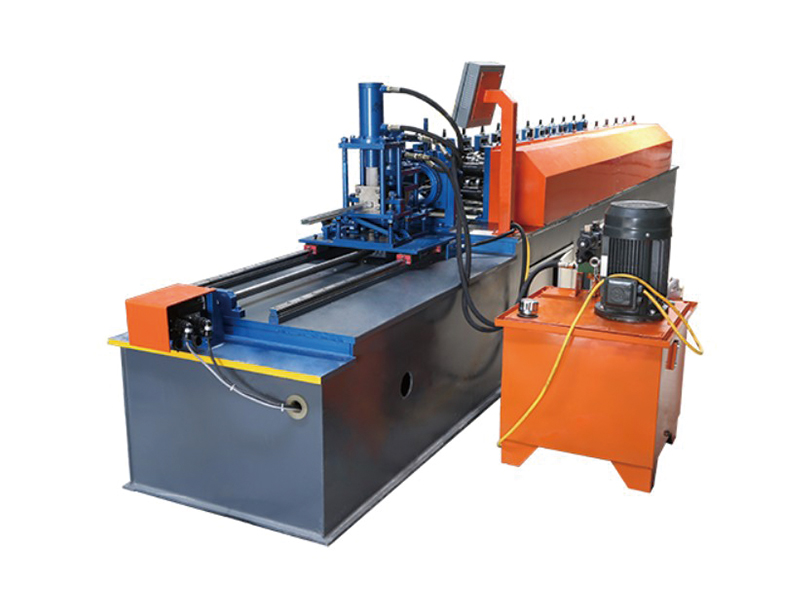
Steel Stud and Track Roll Forming Machines are automated machines specifically designed to continuously cold-bend and plastically deform continuous co...
See Detail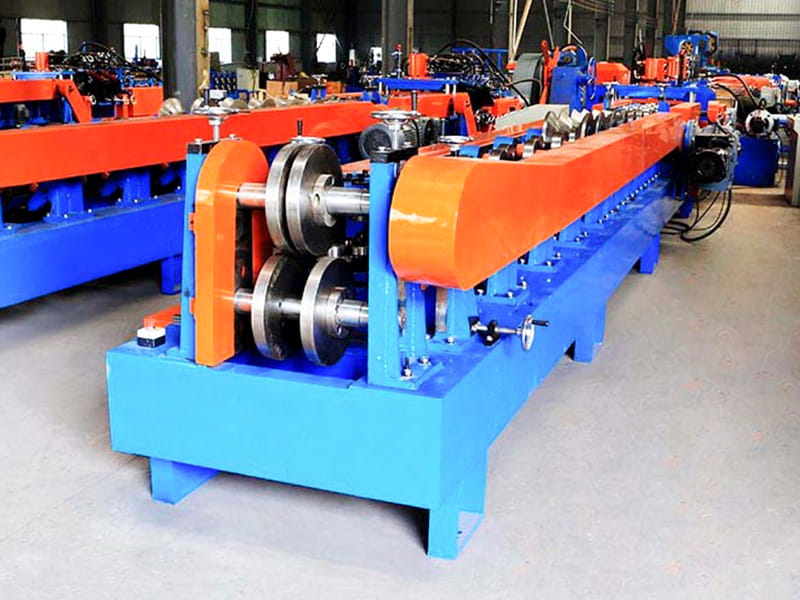
The 100-300 Type CZ Purlin Roll Forming Machine is a versatile, flexible cold-roll forming system specifically designed for steel structure building e...
See Detail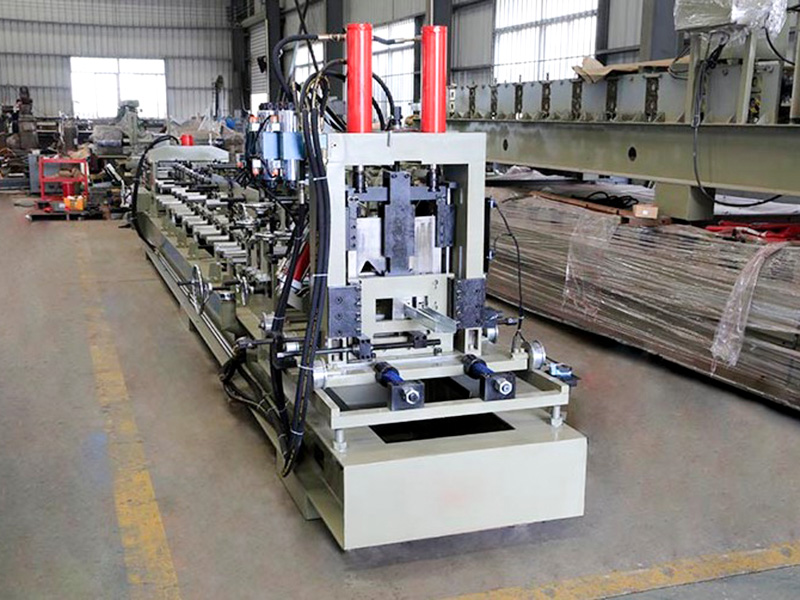
The CU Purlin Roll Forming Machine is a composite cold-roll forming system developed to meet the steel structure construction industry's growing deman...
See Detail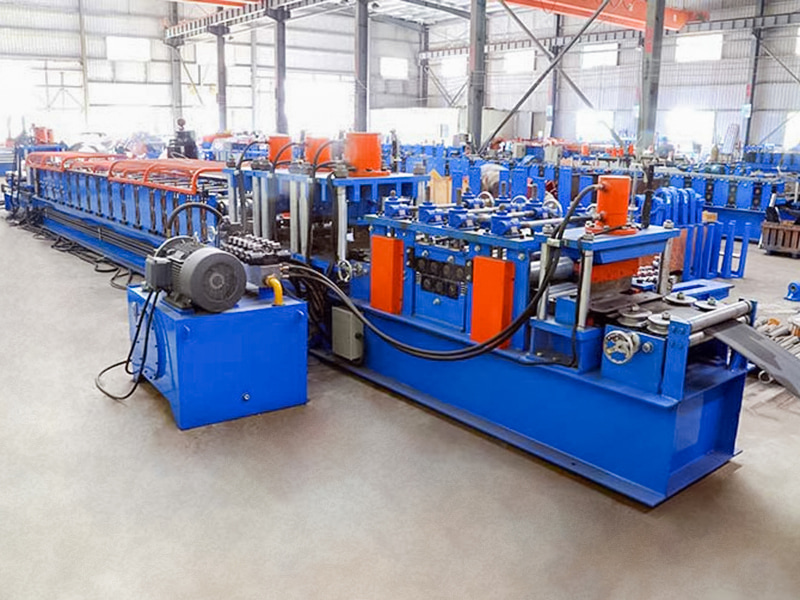
The 80-300 type Fully Automatic C-purlin Roll Forming Machine is a high-performance automated production equipment designed to meet the construction i...
See Detail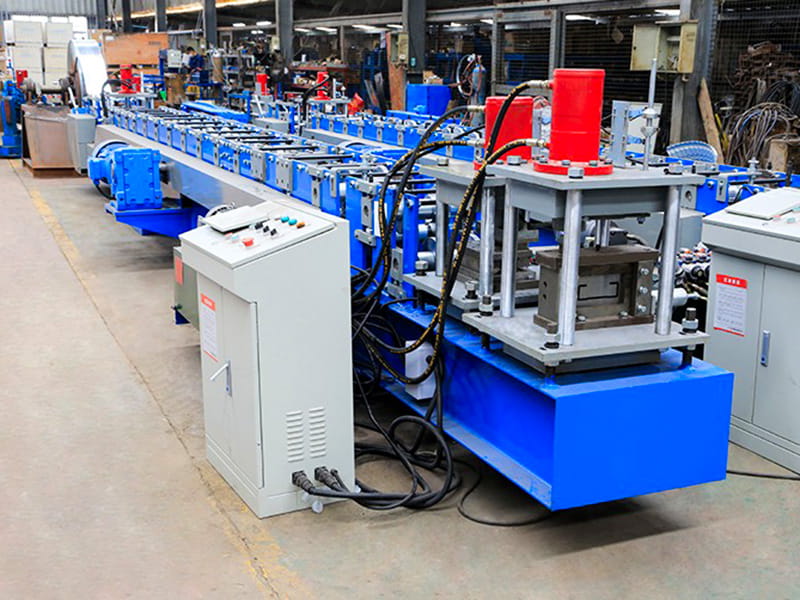
The C-purlin Roll Forming Machine is a core piece of specialized equipment in the manufacturing of steel structure building envelope systems. Using ga...
See Detail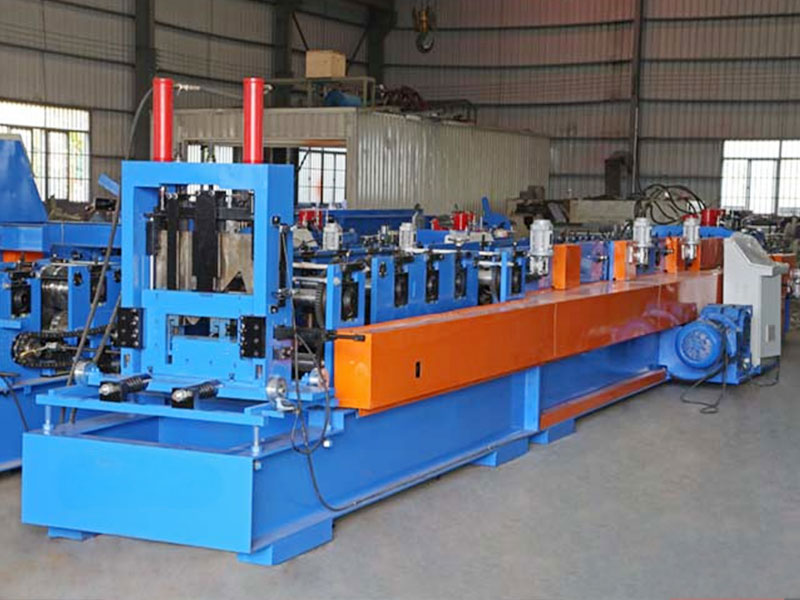
The CZ Purlin Roll Forming Machine is a highly automated industrial machine specifically designed for the efficient and continuous production of C/Z-s...
See Detail

Copyright ©Jiangyin Hailong Machinery Factory All rights reserved Roll Forming Machine Manufacturers
