


 English
 中文简体
中文简体 русский
 عربى
عربىHighway Guardrail Roll Forming Machines
The highway guardrail roll forming machine is an automated cold-forming machine specifically designed for the continuous production of W-beam guardrai...
See DetailContent
A commercial framing contractor waits three weeks for a truckload of B-deck, only to discover the delivered profile is 2 mm out of tolerance. That single delay pushes the entire job schedule back, erodes the margin, and strains client trust. When decking availability becomes the single largest schedule risk, the conversation turns from buying steel deck to owning the means of production. A steel decking roll forming machine turns that risk into a controlled, repeatable process.
For manufacturers, fabricators, and large-scale erectors across the United States, in-line roll forming of floor and roof deck has moved from a niche capability to a strategic advantage. The right machine eliminates freight volatility, buffer stock obsolescence, and quality drift between supplier coils. But not every machine delivers the same uptime, profile accuracy, or total cost of ownership. Understanding the engineering beneath the guarding is what separates a reliable production asset from a constant maintenance liability.
The process begins with a decoiler that feeds master coil into a straightener, removing coil set before the strip enters the first forming pass. The heart of the line is a series of driven roller stations—typically 18 to 24 stands for common deck profiles—each progressively bending the steel from flat strip into a corrugated shape. Flying cutoff shears or hydraulic post-cut units then sever the panel at the exact length, while a run-out table stacks and ejects the finished sheet without operator handling.
A properly engineered line maintains dimensional tolerance across the full production speed. Profile consistency within ±0.5 mm across the web and flange is the minimum acceptable benchmark for commercial decking, and it must hold from the first sheet after a coil change to the last sheet of a shift. Machines that rely on manual shimming or frequent roller adjustment fall short of that standard.
Steel decking roll forming machines are built around a family of interlocking profiles. The most common in the US market are 1½″ and 3″ depth composite and non-composite decks, often referred to as B-deck, N-deck, and wide-rib types. A versatile machine should handle gauge ranges from 22 ga to 16 ga, produce panels up to 40″ cover width, and offer quick cassette or roll-set changeovers between profiles.
Beyond simple corrugation, modern commercial decking requires embossments, stiffening ribs, and interlocking side laps that demand precise roll tooling. A dual-profile line with shared drive and interchangeable upper and lower roll cassettes can switch from a 2″ composite deck to a deep 3″ roof deck in under an hour, dramatically widening the plant’s serviceable market without adding floor space.
Key capability factors to examine:
Production speed, expressed in linear feet per minute, is a headline figure, but a more telling metric is sustained output over an eight-hour shift including coil changes and minor adjustments. A machine rated for 100 ft/min that requires 15-minute stops every other coil delivers less net output than a 75 ft/min machine with automated coil handling and accurate length control.
Frame construction and roller material directly dictate service life. Look for fully welded, stress-relieved steel frames with hardened and ground tool steel rollers. Chromed and polished forming surfaces reduce friction, prevent zinc pickup, and keep panel finish consistent. A machine built on cast-iron plate stands with induction-hardened rollers will outlast a welded structural tube frame by a factor of two to three in constant production, without realignment downtime.
Control architecture matters equally. A full servo-drive system with programmable length, batch count, and production logging allows one operator to run the entire line. Integration with a hydraulic decoiler and automatic stacker removes variability and fatigue. When evaluating a line, request sustained production data at the full gauge range, not only at optimal 20 ga material.
Deck profile choice dictates roll tooling complexity, number of stands, and motor power. The following table summarizes typical requirements for the three most specified commercial deck profiles.
| Profile Type | Gauge Range | Typical Stands | Motor Power (kW) |
|---|---|---|---|
| 1½″ B‑deck (composite) | 22 ga – 16 ga | 18 – 20 | 15 – 22 |
| 3″ N‑deck (deep roof) | 22 ga – 14 ga | 24 – 26 | 22 – 37 |
| Wide‑rib composite (2–3″) | 20 ga – 14 ga | 22 – 24 | 18 – 30 |
Machines engineered for multiple profiles use cassette-type stands that allow the operator to swap the upper and lower tooling sets without disturbing the drive alignment. This design preserves roll gap consistency and cuts changeover time to a fraction of what dedicated single-profile machines require.
A steel decking roll forming machine is a long-lived capital asset, often remaining in continuous production for two decades or more. That makes the manufacturer’s engineering philosophy and support infrastructure just as important as the metal gauges and motor nameplates. Start by examining the design of the roll tooling and the shaft alignment system. Shops that rely on manual shimming to compensate for frame deflection accumulate alignment drift; precision-ground, keyed shafts with hardened bearing housings maintain straightness through millions of cycles.
Hailong’s engineering team, for instance, builds decking lines on fully welded, stress-relieved frames with CNC-machined bearing seats, ensuring that the roll stands remain co-planar across the entire line. The result is markedly fewer unplanned maintenance stops and a tighter tolerance band on the finished profile.
Other essential supplier evaluation points include:
A manufacturer that voluntarily provides full engineering calculations and historical uptime data from field installations demonstrates the transparency needed for a multi-decade partnership. Short-change this due diligence step and the cost of early roller replacement, unplanned downtime, and inconsistent sheet quality will quickly surpass the initial savings on the machine price.
The financial case for a decking roll former hinges on three numbers: current annual purchase volume of decking, the total landed cost per ton (material plus freight and buffer stock carrying cost), and the labor and scrap rate achievable with an in‑house line. For an operation purchasing more than 2,000 tons of deck per year, a well‑specified machine typically pays for itself within 18 to 30 months, purely through freight elimination and scheduling independence.
Additional margin levers include on‑demand production of non‑stock lengths to reduce field waste, the ability to serve spot‑market demand at premium pricing, and reduced reliance on third‑party mill lead times. Of course, the equation demands realistic internal capability: a trained operator, routine maintenance, and access to consistent coil supply. But with modern servo‑controlled machines, the learning curve is measured in days, not weeks.
When you model the total cost of ownership rather than the sticker price of the machine, the slow, cheap alternative invariably becomes the most expensive choice. A decking roll forming line built to last, with tight profile control and low‑friction tooling, converts that model into sustained operating profit.
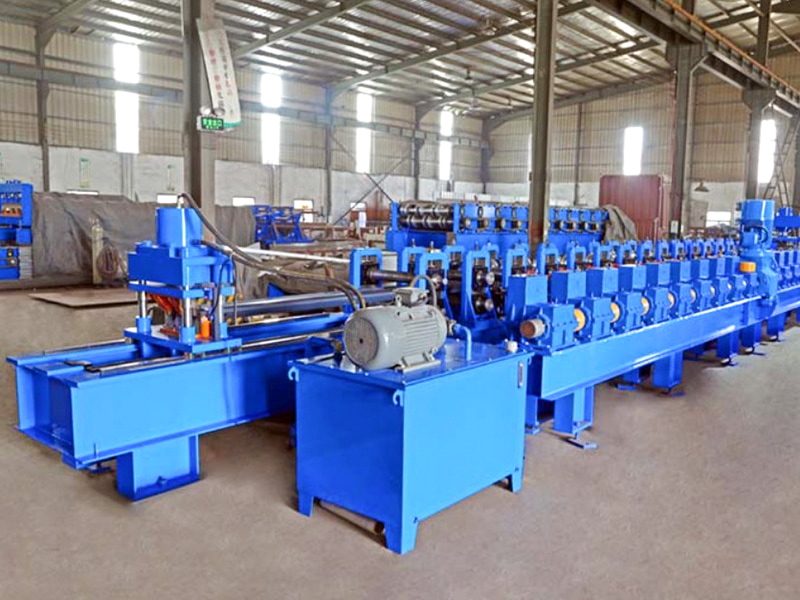
The highway guardrail roll forming machine is an automated cold-forming machine specifically designed for the continuous production of W-beam guardrai...
See Detail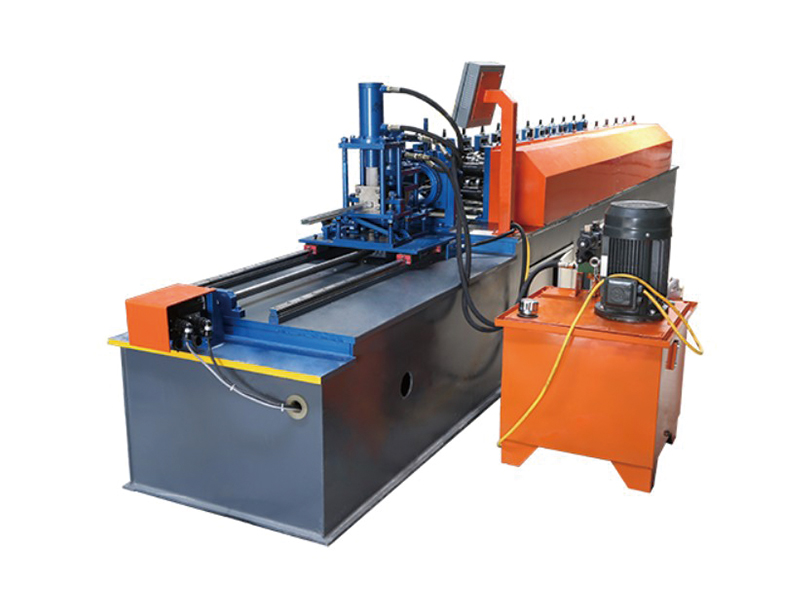
Steel Stud and Track Roll Forming Machines are automated machines specifically designed to continuously cold-bend and plastically deform continuous co...
See Detail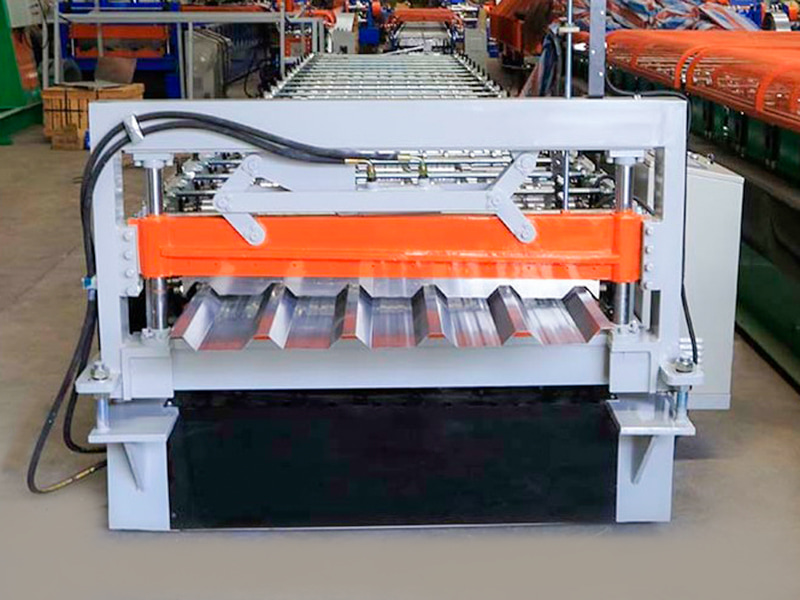
The high speed roofing sheet roll forming machine is a fully automatic sheet metal processing machine designed specifically for the construction indus...
See Detail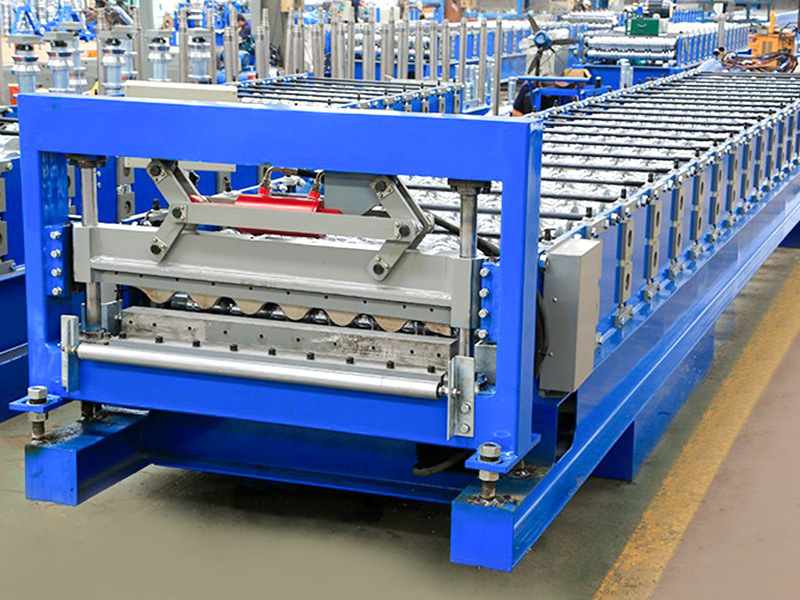
The YX36.5-780 corrugated sheet, with its moderate corrugated height and effective width, strikes an excellent balance between strength, cost-effectiv...
See Detail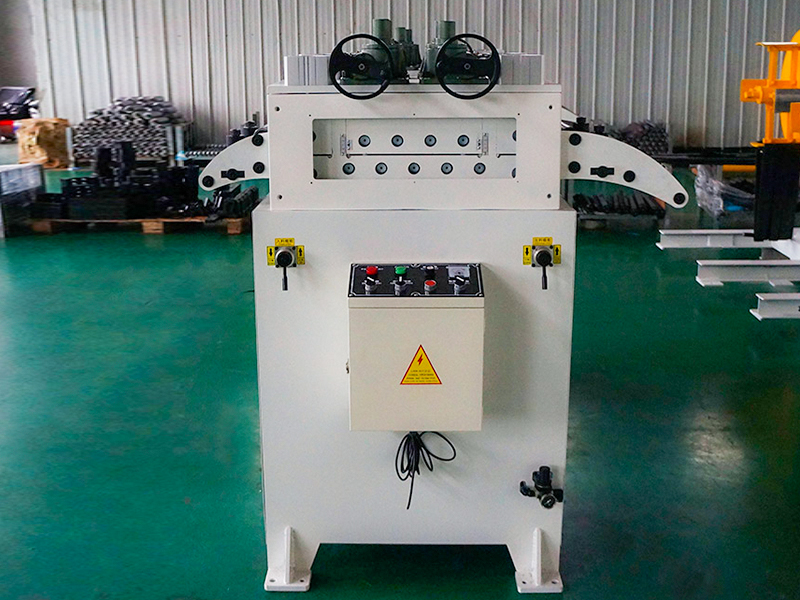
The Steel Coil Leveling Machines (also known as a leveler or straightener) in a cold roll forming production line is a key piece of equipment located ...
See Detail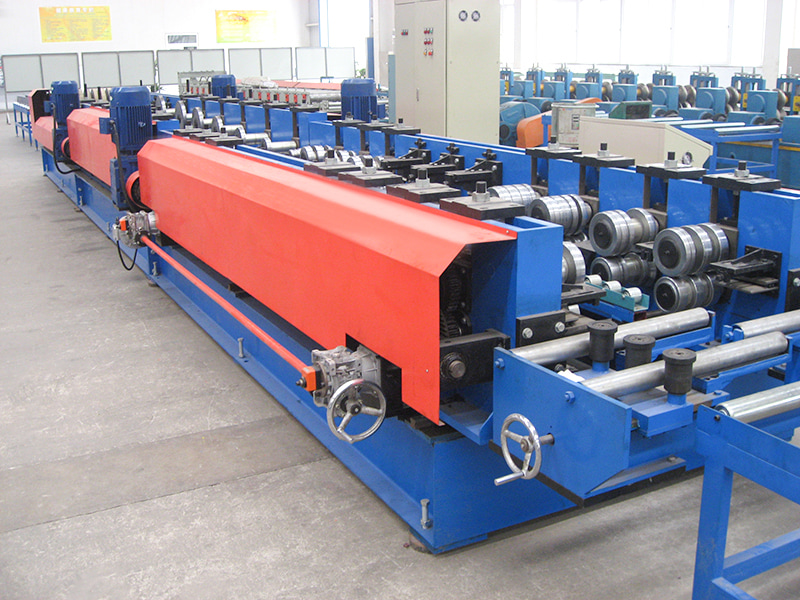
The cable tray roll forming machine is a fully automatic roll forming machine specifically designed for the mass production of metal support component...
See Detail

Copyright ©Jiangyin Hailong Machinery Factory All rights reserved Roll Forming Machine Manufacturers
