


 English
 中文简体
中文简体 русский
 عربى
عربى686-Type Strong Stability IBR Sheet Roll Forming Machines
The 686 IBR Roll Forming Machine is a sheet metal processing machine specifically designed for the continuous production of 686 IBR roof/wall panels. ...
See DetailContent
An IBR sheet that fails a wind-load test on a warehouse roof often traces its weakness back to one decision: the roll forming machine that produced it. A machine with insufficient frame rigidity or worn forming rolls will imprint every flaw onto the finished profile long before the sheet leaves the factory. Selecting the right IBR sheet roll forming machine is therefore not about chasing the lowest price or the highest advertised speed—it is about matching five core engineering parameters to your production reality.
An IBR sheet roll forming machine is a continuous cold-forming line designed to produce Inverted Box Rib (IBR) metal profiles from galvanized steel, aluminum, or pre-painted coils. The machine uncoils, levels, and progressively bends the flat strip through a series of precisely machined roller stations into the distinctive trapezoidal rib shape that defines the IBR profile. A deeper look at how cold roll forming technology has evolved helps explain why modern lines achieve the repeatability that post-forming methods cannot match.
IBR sheets are the dominant roofing and cladding choice for industrial sheds, agricultural barns, large-span warehouses, and low-cost residential projects across Africa, the Middle East, and Southeast Asia. The profile’s wide pan and deep, box-shaped ribs deliver a high section modulus, allowing single-skin sheets to span purlin spacings of up to 1.8 meters without sagging. Combined with a steep drainage angle on the rib flanks, the design virtually eliminates ponding, which is critical in tropical rainfall zones.
| Requirement | IBR Sheet | Traditional Corrugated Sheet |
|---|---|---|
| Span capacity (0.47 mm base metal) | Up to 1.8 m purlin spacing | Typically limited to 1.2 m |
| Water drainage speed | High – vertical rib walls channel water rapidly | Moderate – shallower flute depth retains moisture |
| Side-lap rigidity | Stiff, deep box rib resists wind uplift buckling | Softer lap – more prone to oil-canning under suction loads |
First, the box-rib geometry multiplies bending strength without increasing metal thickness. In practice, this means a 0.40 mm IBR sheet can often replace a 0.50 mm sinusoidal corrugated sheet, delivering a direct material-cost saving. Second, faster drainage reduces the risk of moisture ingress at fastener points, extending the service life of the building envelope. Third, the flat pan section simplifies installation because clips and purlin fasteners seat flush against the metal, avoiding the need for specialized saddle brackets.
A specification sheet can list the same line speed for two machines, yet one will hold a ±0.5 mm profile tolerance for a decade while the other drifts within six months. The difference always lies in the engineering details below. Before evaluating individual parameters, review the general principles of machine selection to frame your assessment correctly.
The frame is the machine’s dimensional backbone. When a forming line runs at 15–20 meters per minute, the repetitive force applied by each roller station generates vibration that transfers directly into the strip. A frame built from bolted-together sections without full-penetration welding and stress-relief annealing will gradually loosen at the joints. The result is a visible wave pattern along the finished IBR sheet—commonly called “chatter marks”—that cannot be hidden by painting.
Look for a frame constructed from heavy-gauge Q235 or Q345 steel plate, plasma-cut and integrally welded, then normalized in a furnace to eliminate residual stress. The base thickness of the side plates should be no less than 20 mm for a production line targeting 12 m/min and above. Wall thickness alone is insufficient; the design must include cross-ribbing and ground anchor pads that lock the entire assembly to a level concrete foundation. A rigid, stress-relieved frame is the single largest factor in maintaining cross-section accuracy beyond 5,000 metric tons of output.
To see how these principles are applied in a production model, you can examine the 686-type IBR roll forming machine engineered for strong structural stability.
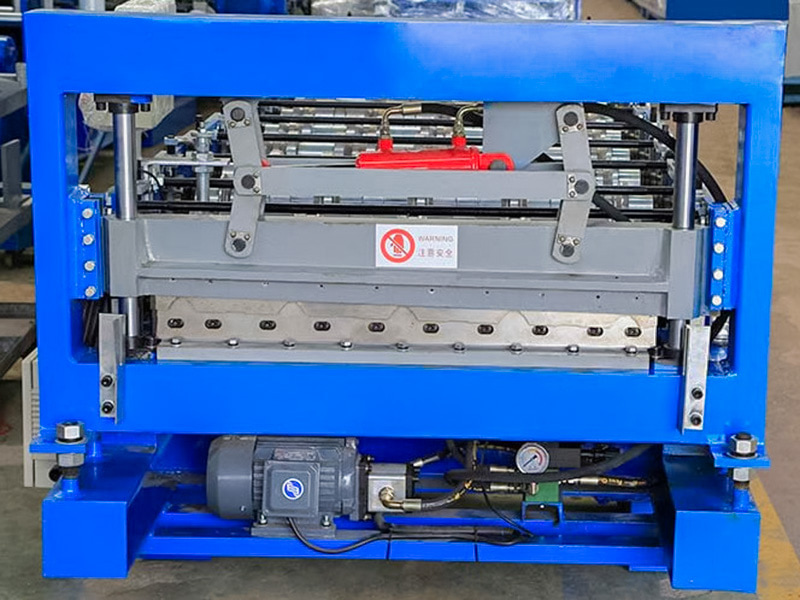 686-Type Strong Stability IBR Sheet Roll Forming Machines Suppliers, Company - JHailong Machinery is China Customized 686-Type Strong Stability IBR Sheet Roll Forming Machines Suppliers and Company, 686-Type Strong St...View Product →
Forming rolls are the contact point where engineering intention meets metal strip. The material choice—typically GCr15 bearing steel, 40Cr alloy steel, or Cr12MoV cold-work tool steel—determines how many millions of linear feet the rollers can shape before the rib profile begins to shallow out. Rolls made from unhardened 45# carbon steel will exhibit measurable wear after forming 2,000–3,000 tons of galvanized coil, especially on the flare entry stations that perform the heaviest bending work.
Quench-hardening followed by hard-chrome plating to 0.05–0.08 mm thickness is the proven specification for high-wear IBR applications. This surface treatment reduces friction, resists zinc pickup from the galvanized coating, and allows the operator to clean the rolls with a quick solvent wipe without fear of corrosion pitting. Demand a hardness range of HRC 58–62 on the roller surface report. Investing in Cr12MoV rolls with comprehensive heat treatment extends the precision life of the forming section by a factor of three compared with generic alloy rolls, which directly protects your per-sheet margin.
An IBR machine’s productivity is defined as much by its cut-to-length accuracy as by its line speed. Every millimeter of over-cut on a 3-meter sheet becomes scrap that cannot be recovered. A well-designed drive system couples a PLC controller (Siemens or Schneider platforms are widely accepted as the reliability baseline) with an AC servo motor on the cutting carriage. The encoder feedback loop constantly compares the measured strip travel with the preset length and triggers the flying shear only when the two align within a single pulse count.
Avoid machines that rely on a mechanical clutch-and-brake shear driven by a chain off the main forming motor. These systems lose timing as the chain stretches and cannot maintain ±1 mm tolerance on sheets longer than 2.5 meters. Instead, confirm that the specification sheet lists a closed-loop servo feed with a tolerance of ±0.5 mm for lengths up to 6 meters. This level of control also enables the machine to produce sheets with notched ends or variable hole patterns without requiring a secondary operation.
Commercial IBR orders rarely call for a single hole pattern. One project may require a 10 mm drainage slot at the rib valley, while the next needs a 14 mm bolt hole on the rib crown spaced every 1,500 mm. A machine that demands a full die-set change and manual re-alignment for each pattern creates a bottleneck that can idle the line for 30–45 minutes between orders.
The modern solution is a servo-driven adjustable die assembly where the punch holder position along the profile width is changed through the HMI touchscreen. Operators recall a pre-saved recipe, and the actuators move the punch units to the correct lateral coordinates within 60 seconds. The shear blade should be segmented, allowing the operator to replace only the worn section of the blade rather than the entire 1,000 mm set. Quick-change tooling that reduces recipe changeover to under five minutes directly increases the number of billable production hours per shift.
The line speed printed in the brochure—often 15 m/min or higher—represents only the forming speed. If the stacker cannot keep up, the entire line throttles down, or worse, finished sheets pile up and scratch each other. A manual unloading station requires two to three workers to lift each sheet off the outfeed table and stack it neatly on a pallet, a process that typically limits sustained throughput to about 8–10 sheets per minute.
An automatic stacker with pneumatic dropping arms, side-aligning guides, and a lift table that lowers incrementally as the stack height increases can handle the same output with one attendant. The stacking accuracy must hold the sheets within a 2 mm edge tolerance to prevent edge damage during strapping. For lines running coil widths above 1,000 mm, a vacuum-assisted lifting beam integrated into the stacker further reduces the risk of oil-canning damage to the wide flat pan. The additional capital for full automation typically pays back within 18 months through labor savings and scratch-free product quality.
Even experienced buyers misinterpret specification sheets if they focus exclusively on headline numbers. One frequent trap is speed misrepresentation: a manufacturer quotes the maximum forming speed of the rollers but does not disclose that the cutting cycle limits the effective speed to 70% of that value when producing standard roofing lengths. Always request a video of the machine running your specific sheet length and thickness, not a generic demonstration coil.
Another recurring issue is edge wave on the finished profile. This is often diagnosed as a roll-gap problem, but in many cases the root cause is insufficient shaft diameter on the forming stations causing deflection under load. Shafts should be at least 55 mm in diameter for a 1.2-meter-wide IBR profile, and they must be supported by double-row tapered roller bearings, not single ball bearings. Similarly, intermittent failure of the hydraulic shear often stems from an undersized power unit that cannot maintain consistent pressure when the oil temperature rises after two hours of continuous operation. Verify that the power pack rating includes a 15% duty-cycle margin above the stated maximum cutting force.
Understanding a manufacturer’s after-sales service structure and spare parts logistics is non-negotiable. A machine with excellent specifications but no local technical support or documented service intervals will inevitably spend more time waiting for maintenance than producing sheets. Insist on a commissioning protocol that includes a 72-hour continuous trial at the factory before disassembly and shipment, with signed quality reports for each produced bundle.
Your immediate order book should drive the initial specification, not a speculative future project. If 95% of your output is 0.47 mm G550 galvanized steel in lengths between 2.4 m and 3.6 m, optimize the forming roll design for that narrow band. Adding excessive flexibility to run 0.30 mm aluminum or 0.60 mm Colorbond without a dedicated cassette change system introduces compromises that reduce the overall quality of your core product. A dedicated IBR machine with a fixed forming cassette will consistently outperform a multi-profile line when producing a single profile over multiple shifts.
For buyers serving export markets with stringent dimensional standards, verify that the machine’s post-cut straightness tolerance is certified to within 1 mm per meter of sheet length. This prevents rejected cargo at the destination port. Browse the full range of IBR sheet roll forming machines to compare specifications across different production capacities and automation levels, ensuring the chosen model aligns with your target output volume and market certification requirements.
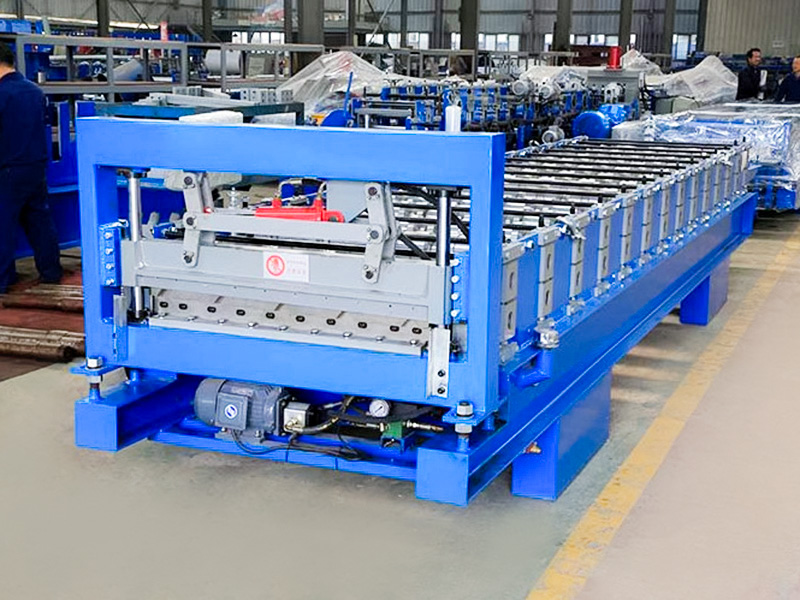 IBR Sheet Roll Forming Machines Manufacturers, Custom FactoryAs IBR Sheet Roll Forming Machines Manufacturers and Custom IBR Sheet Roll Forming Machines Factory in China, Hailong Machinery offer I...View Product →
The 686 IBR Roll Forming Machine is a sheet metal processing machine specifically designed for the continuous production of 686 IBR roof/wall panels. ...
See Detail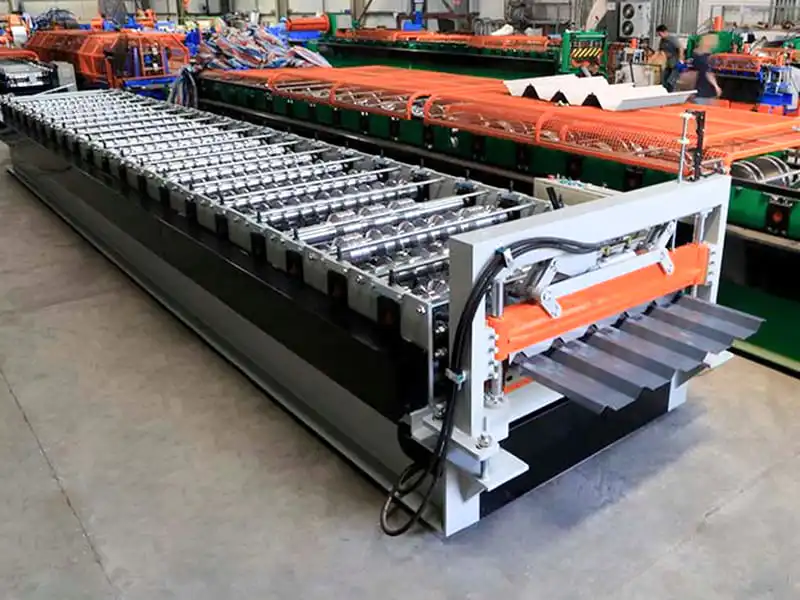
The IBR 1000 profile is a classic, internationally recognized roofing system, widely adopted in regions such as Australia, Southeast Asia, the Middle ...
See Detail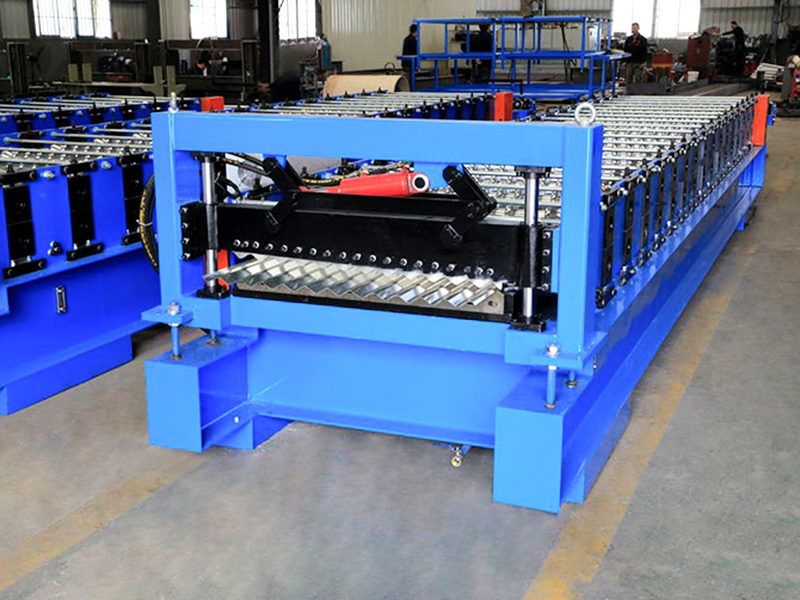
The 825-Type Corrugated Sheet Roll Forming Machine is specialized equipment designed to produce continuous arc-wave (sinusoidal) profiled metal sheets...
See Detail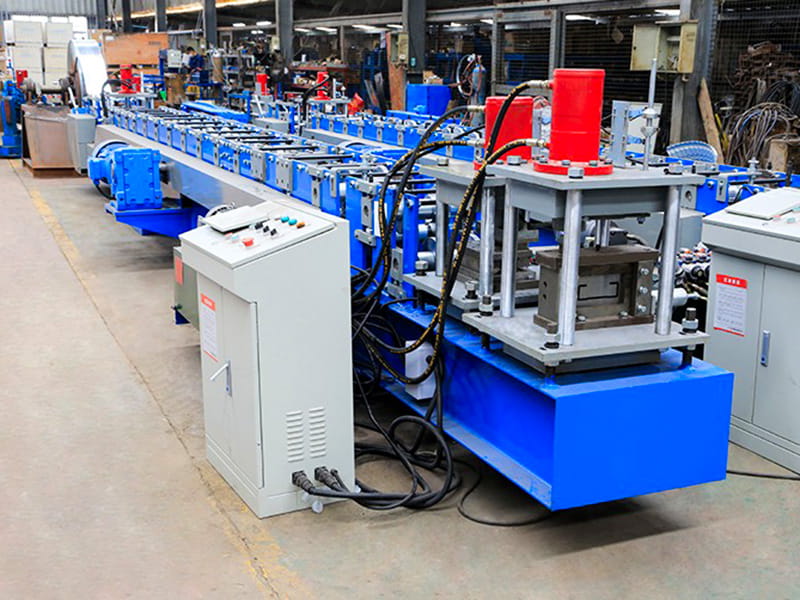
The C-purlin Roll Forming Machine is a core piece of specialized equipment in the manufacturing of steel structure building envelope systems. Using ga...
See Detail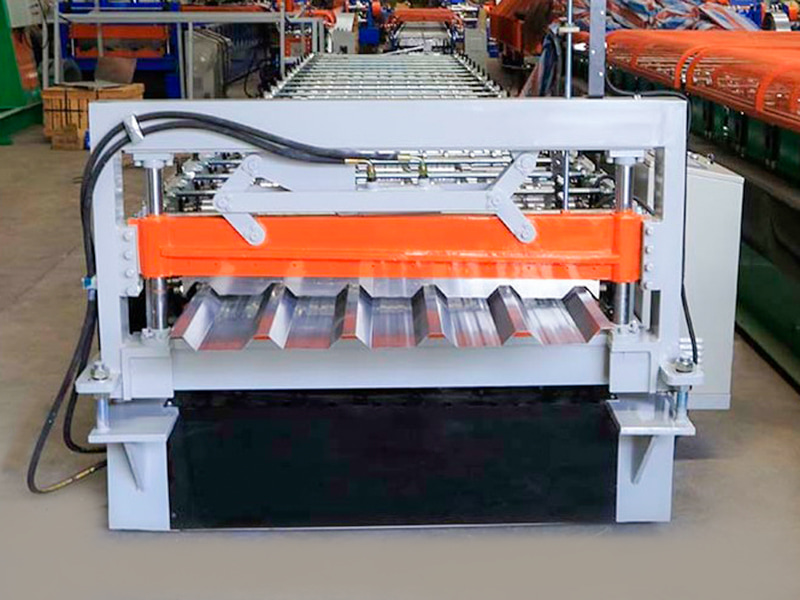
The high speed roofing sheet roll forming machine is a fully automatic sheet metal processing machine designed specifically for the construction indus...
See Detail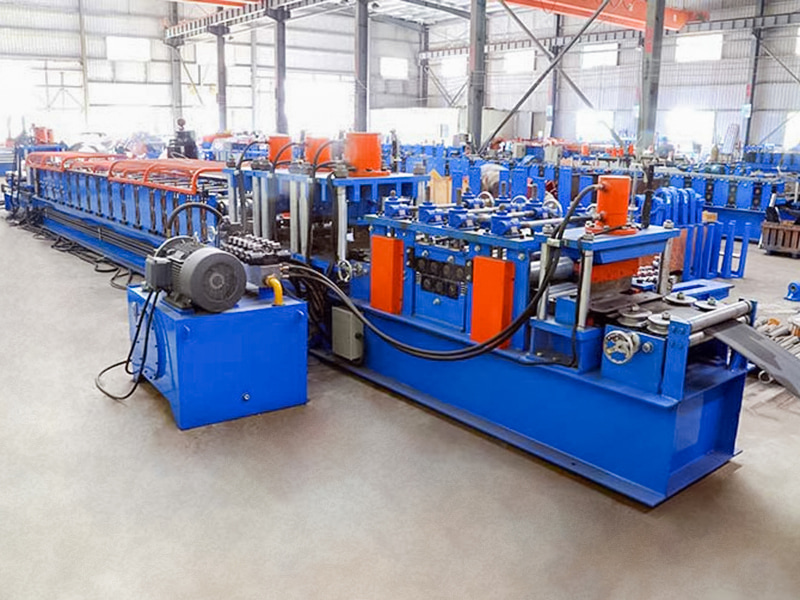
The 80-300 type Fully Automatic C-purlin Roll Forming Machine is a high-performance automated production equipment designed to meet the construction i...
See Detail

Copyright ©Jiangyin Hailong Machinery Factory All rights reserved Roll Forming Machine Manufacturers
